

A leading advisor on the worldwide dark skies conservation programme has praised the outdoor lighting projects being carried out across the North York Moors National Park and Howardian Hills National Landscape to help preserve the night sky from creeping light pollution.
Ahead of the 10th Dark Skies Festival (13 February – 2 March), Dan Oakley, who chairs the committee advising DarkSky International, has commended the way that both protected landscapes are working with individual neighbourhoods and suggested their approach is a template for others to follow.
The praise comes as historic Ampleforth Abbey and its surrounding buildings has become the latest to join the Dark Skies Friendly Community scheme run by the North York Moors National Park. The scheme is funded by Anglo American using section 106 support that compensates for their development within the protected space.
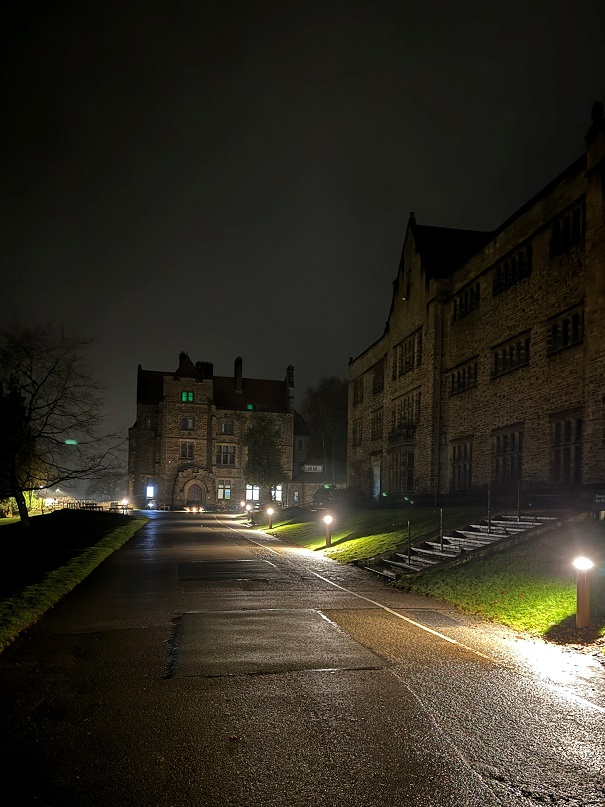
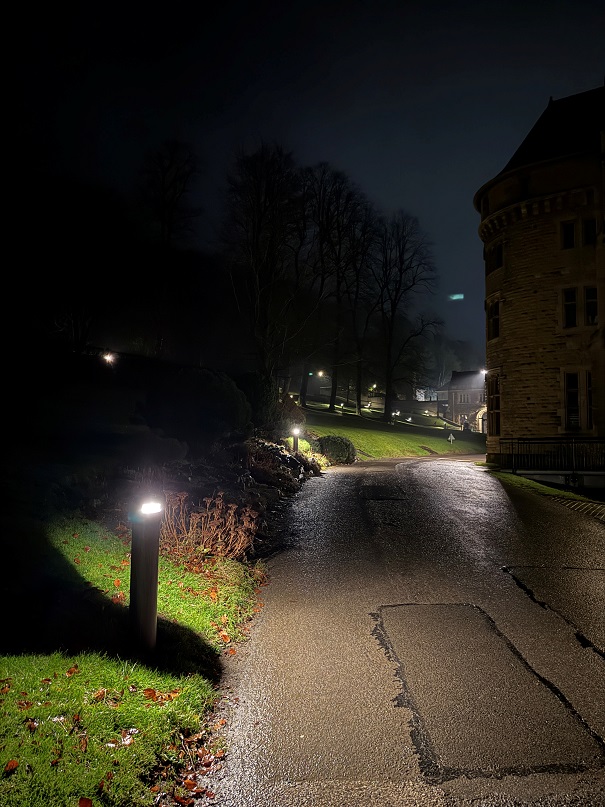
The village of Coxwold on the edge of the National Park has also become an accredited Dark Skies Friendly Community while over in the Howardian Hills, the villages of Bulmer, Crayke and Terrington have achieved similar accreditation via the equivalent scheme funded by the Howardian Hills Partnership.
As part of the scheme, all the completed projects have had a full outdoor lighting audit carried out, not just on street lights but those on public buildings and private homes as well. The audit assesses when and where lighting is needed for access, security or safe walking after-dark, while identifying where there’s unnecessary glare or harsh white lights being used. The communities have then, where needed, retrofitted lights on buildings such as village halls and schools, as well as individual homes to show commitment to converting community lighting to dark skies friendly fixtures.
With the number of audits being carried out and thousands of external lights having been changed to make communities dark skies friendly, it makes the North York Moors and Howardian Hills two of the most significant areas in the country working at pace to protect the quality of the night sky above them.
Dan comments: “It is encouraging to see that the North York Moors National Park has continued to build upon its International Dark Sky Reserve designation in 2020 by engaging with residents and the owners of private lighting.
“The engagement with Ampleforth Abbey to audit and improve lighting conditions is an excellent example of how reserves should work collaboratively with partners to conserve and enhance the special quality of the sky. Engaging with private lighting owners is not easy and this dark sky lighting project serves to inspire other landscapes to achieve the same outcomes.”
At Ampleforth, the glare from some of the lights on the Abbey and the surrounding buildings, including the Visitor Centre, café and shop, was intrusive and at odds with the peaceful and tranquil environment.
Following National Park’s guidance, the Abbey carried out an audit of lighting needs, resulting in over 100 lights either being changed, having their bulbs swapped for a warmer white light or having small alterations to their projection angle to ensure no unnecessary beams were cast upwards.
Now the Abbey’s community of Benedictine Monks, as well as visitors enjoying the retreat facilities, can safely walk around after dark and even get a better night’s sleep while minimising light pollution. Nearby woodland is home to a number of owls who will also benefit from having their nocturnal habitat restored.
Already a swathe of other parishes, such as Botton and Bransdale, as well as Goathland and Husthwaite, are set to embark on similar projects to become part of the scheme.
Mike Hawtin, the North York Moors National Park’s Head of Nature Recovery Projects and Dark Skies lead officer explains: “After the National Park became an International Dark Sky Reserve, it really focused people’s minds on how we could, not just protect, but enhance that status further.
“Since the village of Hawnby’s dark skies lighting project completed last year, there’s been a step change in the number of parishes and communities looking to achieve similar accreditation. People are realising just how much a dark sky needs to be cherished and this, together with a community’s sense of pride and passion for protecting their neighbourhood and wildlife, is creating the momentum. Together with North Yorkshire Council’s recent commitment to upgrading more streetlights, it means we can really make a big impact over the coming years.”
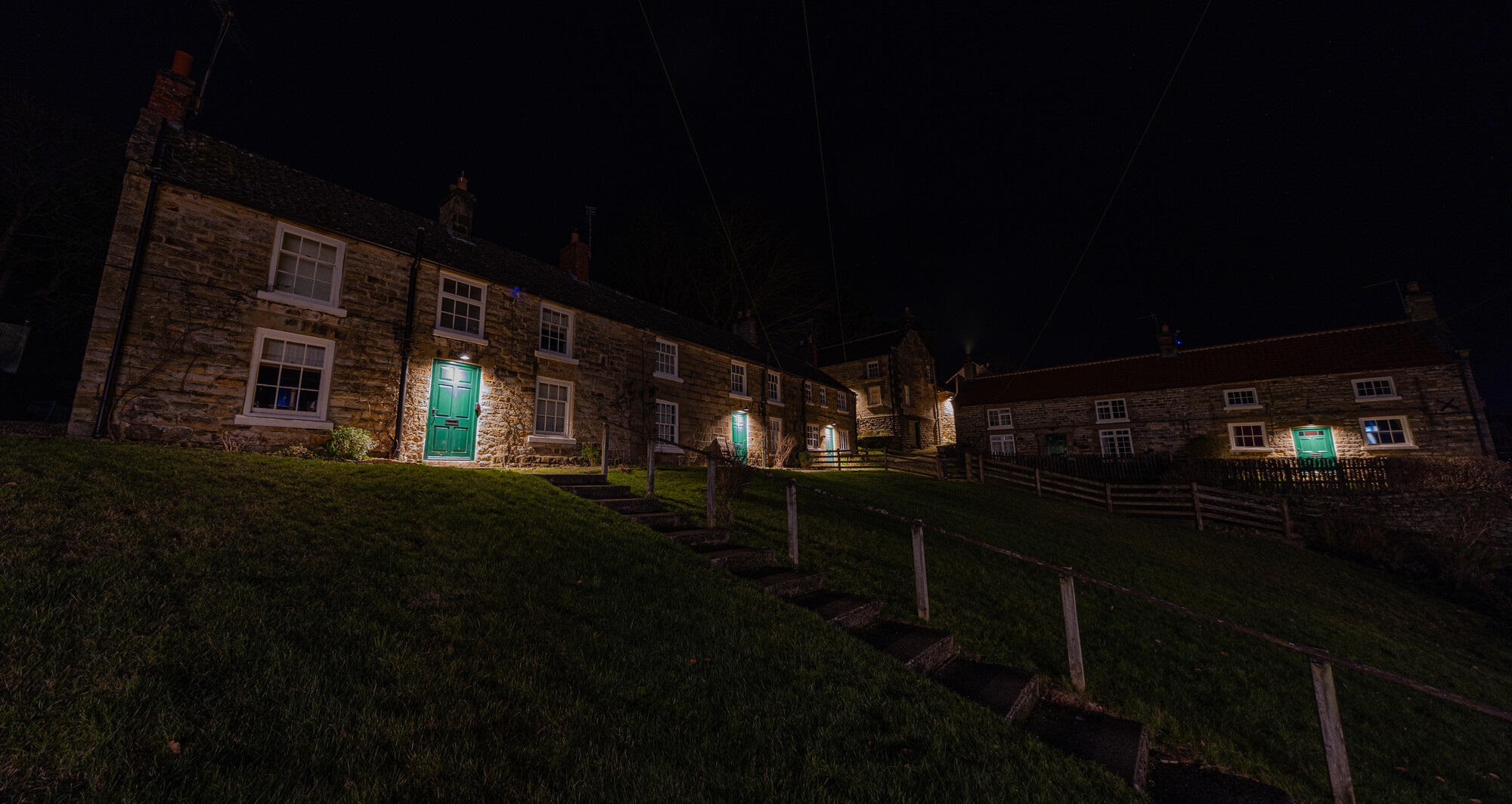
Ellie Hook, Manager of the Howardian Hill National Landscape, added: “I’m thrilled we’ve been able to work with three communities in the Howardian Hills to make them officially dark skies friendly as part of this joint scheme. It follows a successful series of public roadshows which drew hundreds of people, revealing the depth of concern and priming interest in tackling light pollution. For the first time we’ve been able to support demonstration projects to replace poor lighting with dark sky friendly fixtures. The results are eye-catching and offer a powerful practical example that dark sky lighting really is the way ahead.”
The Dark Skies Festival continues until the 2 March with events right across the North York Moors and Yorkshire Dales National Parks, as well as both the Howardian Hills and Nidderdale National Landscapes.
For more programme information go to www.darkskiesnationalparks.org.uk
ENDS
Notes to editors:
The Dark Skies Festival runs across four protected landscapes - North York Moors National Park, Yorkshire Dales National Park, Nidderdale National Landscape, and Howardian Hills National Landscape.
North York Moors National Park
The National Park is a beautiful landscape of stunning moorland, spectacular coast, ancient woodland, dark skies and historic sites. Created on 28 November 1952, it became Britain’s sixth national park. The North York Moors National Park Authority works with a wide variety of people to care for this beautiful corner of Yorkshire. Nearly 14% of its staff are apprentices from local families. For more information go to www.northyorkmoors.org.uk
Yorkshire Dales National Park
The Yorkshire Dales National Park is a landscape of immense beauty and character with valleys of hay meadows, dry stone walls and barns, waterfalls, woodlands and peaks - one of the country’s most picturesque places. The Yorkshire Dales National Park Authority has two main purposes: to conserve and enhance the natural beauty, wildlife and cultural heritage of the National Park and to promote opportunities for the understanding and enjoyment of its special qualities. For more information to go www.yorkshiredales.org.uk
Nidderdale National Landscape
Nidderdale National Landscape covers 603 sq km (233 sq miles) from Great Whernside in the Yorkshire Dales through to the edge of the Vale of York in the east. The fascinating geology of the area, which has created a gorge and eye-catching rock formations, together with the tranquil expanses of water, open heather moorland, rolling pastures and scenic villages, are among the special qualities of the National Landscape.
Howardian Hills National Landscape
Howardian Hills National Landscape covers 204 sq km (79 sq miles) of North Yorkshire countryside, nestled between the North York Moors National Park, the Yorkshire Wolds and the Vale of York. It is a captivating landscape with its well-wooded rolling countryside, patchwork of arable and pasture fields, tranquil villages and historic country houses with classic parkland landscapes.
For further information and images please contact Amanda Brown at A2BPR on:
T:
M:
E: amanda@a2bpr.co.uk
Or Nina Beadle, Communications Officer, North York Moors National Park Authority:
T:
E: press@northyorkmoors.org.uk
Or Andrew Fagg, Media Officer, at the Yorkshire Dales National Park Authority
T:
E: andrew.fagg@yorkshiredales.org.uk
Last updated: 08 Mar 2025