

29 April 2025
A citizen science project that saw volunteers set up bat detectors in locations around the North York Moors National Park captured more than 1.2 million recordings of bats, with at least 10 of the UK’s 18 different species confirmed as present in the area. The project, which was part of the Ryevitalise Landscape Partnership Scheme, also provided unexpected evidence of the northwards spread of three different species of bush cricket across the UK countryside.
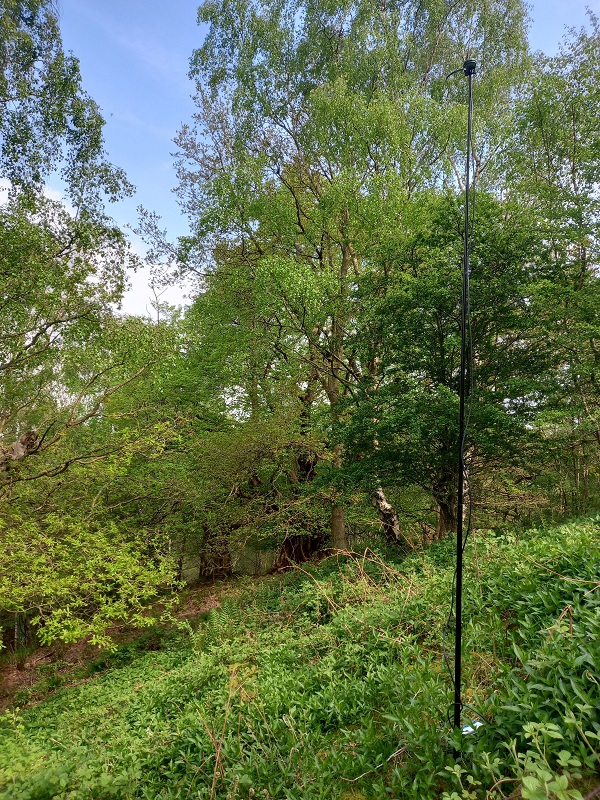
 Between 2020 and 2024, the Ryevitalise project worked with volunteers to conduct bat monitoring between May and September each year. Anyone was able to collect and set up the equipment in a pre-arranged location where it was then left for four nights. The devices used detect and record ultrasound, such as the echolocation calls of bats, but also noises from certain other animals, including shrews, rats, moths and crickets. Volunteers uploaded their audio recordings to the British Trust for Ornithology's ‘Acoustic Pipeline’, which uses machine learning to automatically identify species. The results are then accessible to participants through an online platform.
In total, the study captured more than 2.2 million wildlife recordings, with 1.2 million of these confirmed as having come from at least 10 different species of bats. Also recorded were four species of small mammal (common shrews, brown rats, Eurasian pygmy shrews and wood mice), along with three species of bush cricket and two audible moth species.
Toby Panter, Conservation Field Officer and co-author of the report, said:
“This project has been another amazing demonstration of the value of volunteer and citizen science data gathering. More than half of the verified records were collected by volunteers, so the scope of the project is far greater than we could have achieved ourselves.
“The data tell us a huge amount about the distribution of bat species in our area and helps us plan future conservation projects such as tree planting, hedge laying and the creation of species-rich grassland sites and wetlands. These types of actions increase biodiversity and habitat connectivity, benefitting a huge range of wildlife and insects as well as bats, and ultimately human communities through building resilience to climate change.”
March of the crickets
Crickets first made an appearance in the survey in 2022, when the ‘long-winged conehead’ cricket was detected in two locations. This same cricket was detected again in 2023, alongside a second species, Roesel’s bush-cricket, which was heard in not just one, but four locations and across eight different nights. By 2024, a third species was on the scene. In fact, by this final year of the project, the long-winged cone head cricket was found in seven locations, Roesel’s bush cricket in six, and the speckled bush cricket in two.
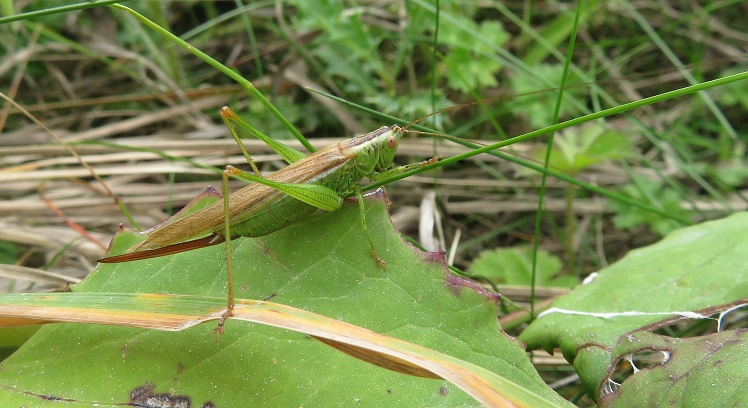
Toby continued:
“It’s fascinating that while crickets were not the focus of the study, we have seemingly recorded the annual range expansion of these species in real-time.”
Elspeth Ingleby, Ecologist for the North York Moors National Park Authority, added:
“Climate change is shifting the fortunes of many insects. Whilst it may seem like positive news for these crickets, we know that other species, including important pollinators such as moths and butterflies, face growing challenges in survival. Most insects cannot control their body temperature and so are entirely dependent on environmental conditions. Even tiny changes in seasonal patterns can have a big impact on their survival.”
Both Toby and Elspeth are keen to stress however, that there’s still lots that can be done to help our insect populations. Elspeth said:
"Woodlands, meadows and wetlands provide insects with a range of microclimates and resources, allowing them to move freely in search of food, shelter and mates. Even the smallest garden can act as a stepping stone between these spaces, linking fragmented habitats and helping buffer the impacts of climate change.”
To read the full results of the study, please visit northyorkmoors.org.uk/citizen-science
To find out more about how you can help wildlife in your own garden, please visit northyorkmoors.org.uk/nature-recovery-hub
The Ryevitalise Landscape Partnership was supported by the National Lottery Heritage Fund and ran from 2019-2025.
ENDS
Nina Beadle, Communications Office, North York Moors National Park Authority
press@northyorkmoors.org.uk
01439 772700
The North York Moors National Park
The North York Moors is a beautiful landscape of stunning moorland, ancient woodland and historic sites. Created on 28 November 1952, it became Britain’s sixth national park. Covering an area of 554 square miles (1,436 square kilometres) the National Park has 26 miles of coastline, two national nature reserves, 840 Scheduled Monuments and over 3,000 listed buildings, attracting an estimated 8.4 million visitors a year.
The National Park has two visitor centres, Danby Lodge National Park Centre and Sutton Bank National Park Centre, providing opportunities for cycling, walking, eating, picnicking, shopping, crafts and wildlife-watching. The centre in Danby also houses the Inspired by… gallery, which features regularly changing exhibitions by artists who draw their inspiration from the North York Moors.
The North York Moors National Park Authority works with a wide variety of people to care for this beautiful corner of Yorkshire, providing apprenticeships and volunteering opportunities with nearly 14% of staff being apprentices from local families.
To view other press releases and for further information about the North York Moors National Park, visit www.northyorkmoors.org.uk
Last updated: 01 May 2025