

By Mike Hawtin, Head of Nature Recovery Projects at the North York Moors National Park Authority
Artificial Light at Night, or ALAN, is one of the fastest-growing forms of pollution on the planet. It affects wildlife, human health, energy use and our ability to experience the natural night. So when the 9th International ALAN Conference took place in late 2025 on the west coast of Ireland, it felt like an important moment to step back, listen, and share what North York Moors National Park has been learning on its own dark skies journey.
A global conversation about the night
Held in Westport, County Mayo, the conference brought together more than 200 delegates from 45 countries. Scientists, ecologists, planners, policy-makers, lighting designers, protected landscape staff and community practitioners all came together with one shared question: How do we use light better, for people and for nature?
Hosted by Dark Sky Ireland, and supported by a wide range of public bodies, charities and organisations, the conference reflected just how mainstream the issue of light pollution has become. With nearly 80 sessions over four days, the breadth of topics was enormous. Some of the strongest themes included:
- More light doesn’t mean more safety
Evidence from across Europe shows that brighter streets don’t automatically reduce crime or accidents. In some cases, removing or redesigning lighting has led to reductions in crime and slower traffic speeds. The message was clear: Better lighting is safer than more lighting.
- Darkness is habitat
Rather than talking only about ‘protecting dark skies’, many speakers encouraged reframing the issue as protecting all life under the night sky. Insects, bats, birds, mammals and aquatic species are all affected by artificial light. Darkness itself is a critical habitat.
- Fair access to night
Across the world, disadvantaged communities are often exposed to excessive lighting, based on assumptions about safety that don’t hold up. This not only affects health but also limits people’s ability to experience natural darkness. As the David Attenborough quote goes: “No one will protect what they don't care about; and no one will care about what they have never experienced.”
- Culture matters
One of the most memorable experiences of the conference was Dusking - a shared audio ritual, rooted in an old Dutch tradition and reimagined by Marjolijn van Heemstra, that gently guides participants from twilight into night and challenges the idea that darkness is something to fear. Following the experience, we actually managed to bring dusking to our 2026 February Dark Skies Festival with two events at Helmsley Walled Garden. As highlighted by The Guardian in an article about the event, Dusking adds a powerful mindfulness dimension to the dark skies movement, reminding us that tackling light pollution isn’t just about technology or policy, but about reshaping our cultural relationship with the night.
Learning from Ireland and sharing the North York Moors story
Ireland is leading the way in some fascinating areas. One standout example was the ACRES scheme (Agri-Climate Rural Environmental Scheme), which recognises darkness as an environmental asset. Through the Rural Restorative Lighting initiative, farmers are supported to retrofit or install wildlife-friendly lighting on farm buildings, an approach that closely aligns with work already happening in the North York Moors (and made possible through our s106 agreements for Landscape and Ecology compensation).
There was also a strong spirit of collaboration throughout the conference. The Irish word meitheal, meaning people coming together for the common good, came up repeatedly, and it captured the atmosphere perfectly.
I was also fortunate enough to have a paper accepted at the conference myself and delivered a 15-minute presentation entitled ‘North York Moors National Park International Dark Sky Reserve: Delivering dark skies friendly lighting projects at scale through community engagement’. It was extremely challenging to fit everything I wanted to say into such a short time span, but it went down really well, with lots of interest and positive questions at the end, some great feedback and several contacts from across the world wanting to follow up to learn from our work.
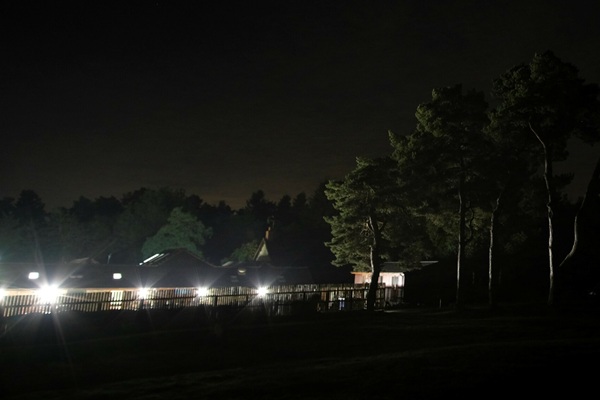
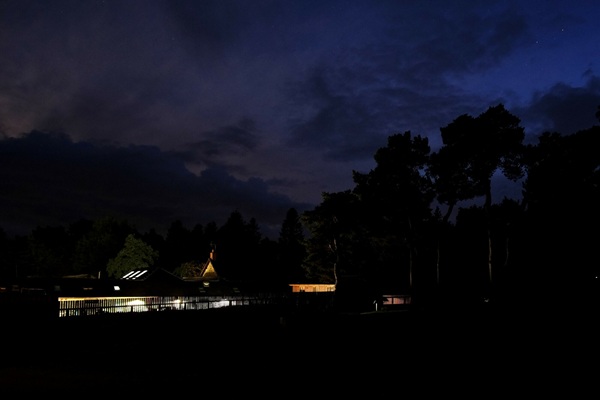
Bringing it home
The final workshop sessions on Friday highlighted a shared challenge: while we know a great deal about the impacts of artificial light at night, we don’t always communicate it in ways that are clear, simple and engaging for wider audiences.
There was a strong call for academics and researchers to work more closely with practitioners, helping turn complex evidence into messages that people can easily understand and act on. With ten discussion tables and short summaries from each facilitator, the sessions generated a fast-paced exchange of ideas, and I’m looking forward to seeing the full workshop roundup.
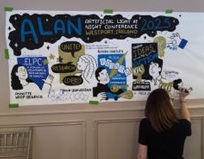 A graphic recording artist captured the discussions live, using illustrations and keywords drawn from conversations and post-it notes. Watching ideas take shape visually was a powerful reminder of how creative approaches can support meaningful engagement, something that could have real potential in our own work with communities.
Artificial light at night is something we can all do something about, often easily and cheaply. The conference reinforced that protecting the night isn’t about switching everything off, but about using light wisely, so people, wildlife and landscapes can all thrive.
When planets align...
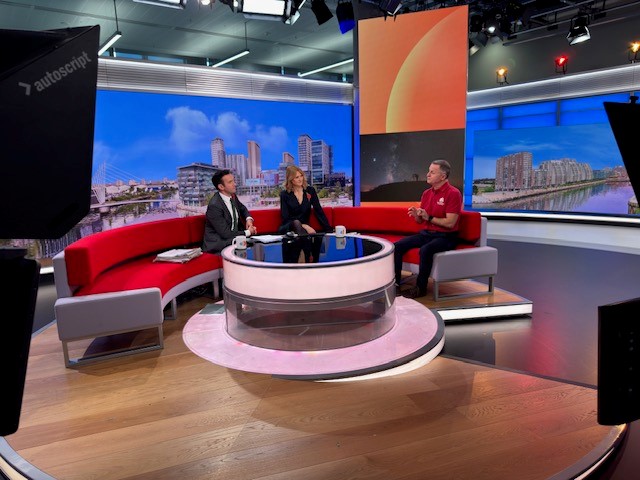 Just when I thought the week was complete, a call from a withheld number to my mobile (while I was waiting for the ferry back to Holyhead) turned out to be an invitation to chat about dark skies on the BBC Breakfast sofa! By complete coincidence, I had arranged to stay in Manchester that very evening (the night before the interview), so the planets really did align. It was also a welcome reminder that interest in this important issue is growing, and opportunities can appear when you least expect them!