Woodland creation at Honeysuckle Farm
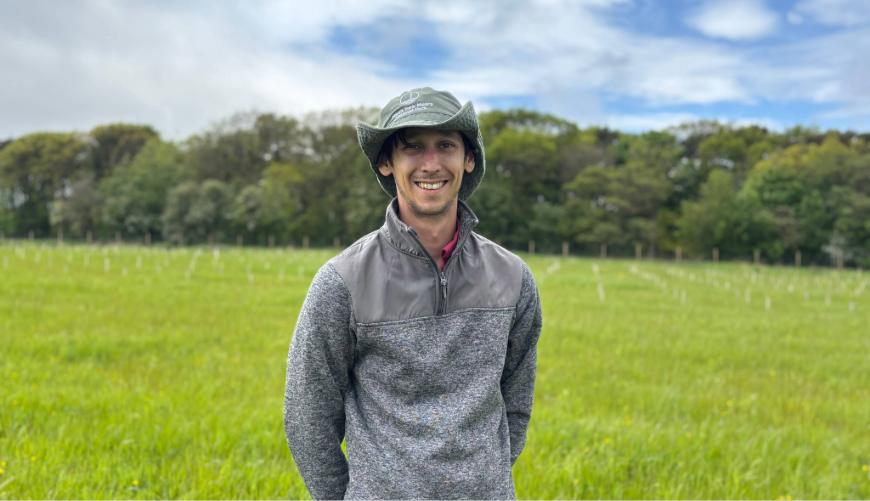
Just off a busy road, not far from Whitby, is Honeysuckle Farm, where our Woodland Creation Team have been busy. Nearly 6,000 young trees, including silver birch, wild cherry and hazel, have been planted in a field around the size of eleven football pitches.
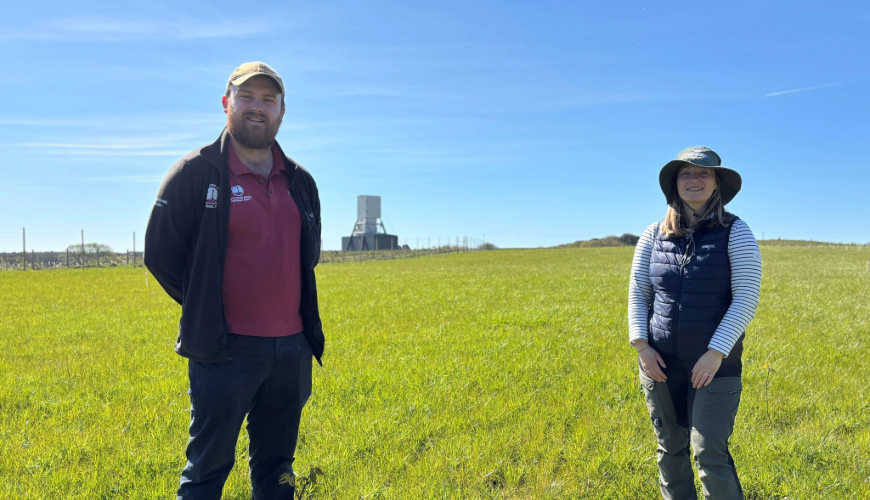
The scheme is part of an ambitious 100-year initiative, funded through the Section 106 agreement with Anglo American as part of offsetting carbon emissions from Woodsmith Mine. This particular planting site sits within sight of the mine itself, which adds an interesting, circular perspective. The same ground that will eventually yield polyhalite 1,500 metres down, is growing oak and hazel on the surface.
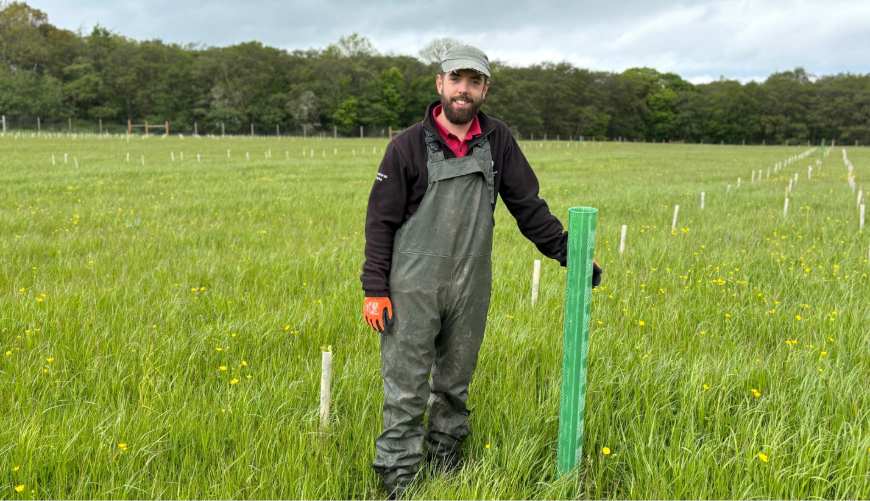
The Honeysuckle Farm project is exploring alternative techniques and approaches to woodland creation. No plastic tree tubes have been used and no chemical sprays. Instead we have deer fenced the whole site and planted most of the trees without any guards, other than using some 100% plant-based tree spirals to help with future maintenance of some of the trees. These guards are certified biodegradable and will break down into the soil within a few years.
The design of the project reflects another approach: agroforestry. This is the practice of deliberately integrating trees into farmland, so land continues to be productive while also delivering the benefits of woodland. Part of the site has wide spaced rows of trees running the length of the field , with open space between them called rides. This leaves space for hay cutting and potentially grazing in the future.
Some other rows are planted in tighter straight lines for a practical reason, so the trees can easily be found managed and eventually thinned as they mature into broadleaf woodland. The landowner is also an archer, and the rides are wide and long enough to shoot in both directions. The project doesn’t end with straight lines though; the scheme also includes an area of coppice and shrubby woodland edge.
Careful thought has been paid to the trees we’ve planted. These include fruit trees, like the Hunt House apple, a variety originating from a small farm near Goathland. There’s also Ribston Pippin from Knaresborough, Acklam Russet from Acklam near Malton, and Rymer Apple from Thirsk. The wood-fibre wraps are even made in Hull, so there’s a decidedly Yorkshire vibe running through this project. It gets even more local though, as Gregor, our Woodland Operations Supervisor explains:
“some of the trees we plant are from seed collected from ancient trees in the area. There’s every chance those trees could still be here in five or six hundred years.”