The amazing afterlife of trees.
In the world of business, the term ‘deadwood’ is negative. It suggests a system, tool or even a person no longer adding value. When we’re talking about the natural world though, this couldn’t be further from the truth.
Deadwood supports biodiversity in ways that might go unnoticed when our eyes, hearts and minds are distracted by the wonder of the living woodland. But next time you see an apparently dead tree, or a pile of old branches, we suggest a closer look, it’s likely you’ll see an ecosystem teeming with life.
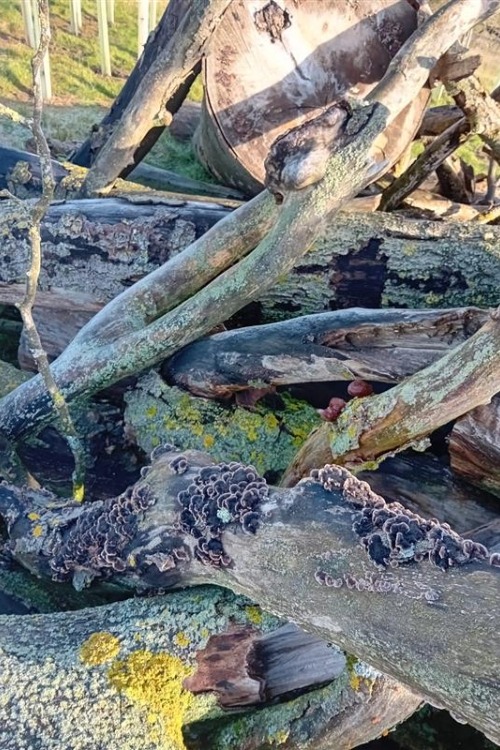
From fungi to insects, specialist species help break down the hard materials that make up the wood, returning important nutrients to the ground. Deadwood also hosts a wide range of other creatures, as our Ecologist, Elspeth Ingleby, points out:
“Willow tit, one of our most threatened birds, are dependent on soft, rotten deadwood in which they can excavate a new nest hole each spring. Log piles often support newts, toads, spiders and more.”

Ravensthorpe Manor deadwood project
Traceable back to the Domesday Book of 1086, when it was recorded as ‘Rauenestorp’, Ravensthorpe, near Boltby, was the site of a moated manor house and a significant settlement in the medieval landscape that was probably abandoned somewhere between the 15-1700s.
The surrounding area once hosted several roundels. In the medieval period, these were often called clumps and were used to mark boundaries and provide shelter for livestock. From the 18th century, the practice was imitated for aesthetic purposes, whereas today it is often used in agroforestry, to provide shelter for livestock as well as stepping stones for wildlife.
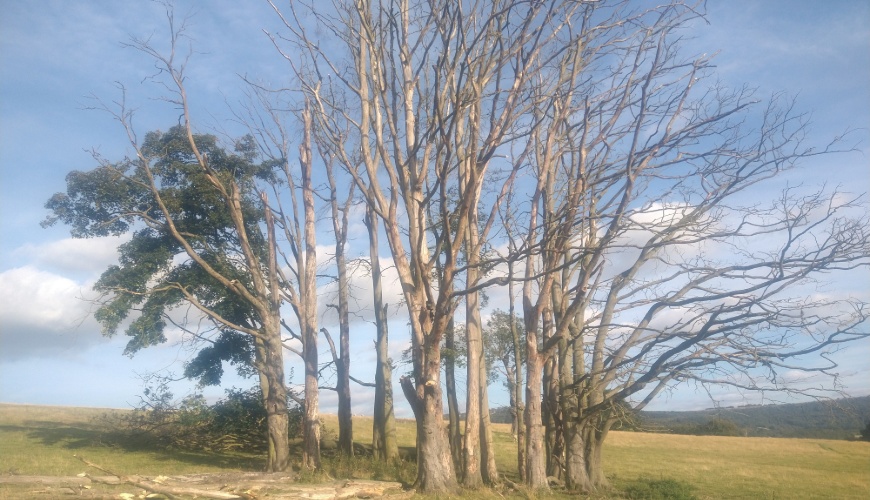
Over time the last remaining roundels at Ravensthorpe Manor consisted of standing dead and unstable trees. Rather than felling the trees for firewood, the landowner was interested in using the deadwood to create habitats for nature. Our Farming in Protected Landscapes scheme provided funds to safely remove the remaining dead trees and move the deadwood into a nearby area, where new woodland was being created.
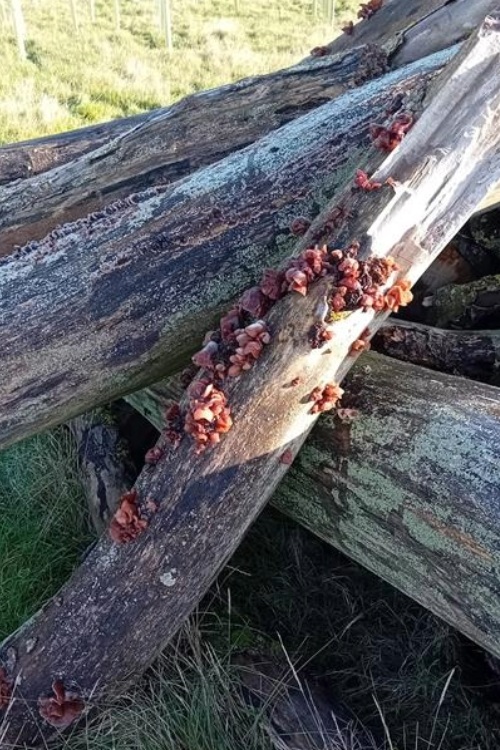
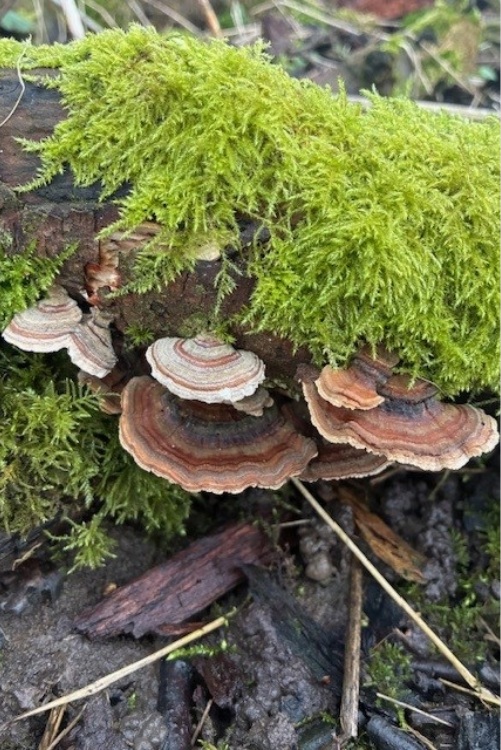
One of our Woodland Officers recently revisited the site where they saw clear evidence of success, including the presence of fungi on the deadwood: