

In the presence of ancients.
It was a cool, dry afternoon with hints of sunshine breaking through. I found myself standing in the hollow of an ancient oak, perhaps 400 years old, maybe more. It's hard not to get lost in the feeling of magic and myth in an moment like this, but aside from that feeling I didn't know very much about ancient trees. Being on site with four experts, with decades of ecological knowledge between them, meant this was about to change.
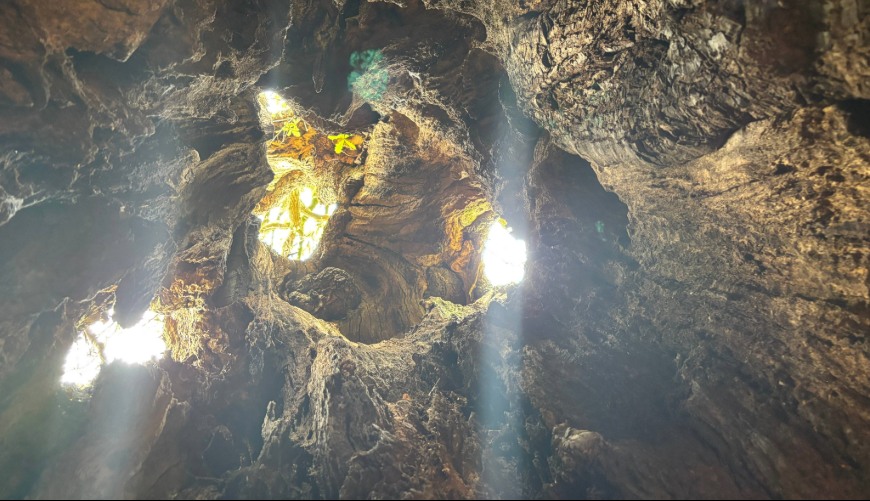
I was on an ancient tree tour as part of a conference, hosted by the North York Moors National Park, along with staff from National Parks across the UK. None of us were tree experts so it was great to have the opportunity to ask questions. These questions, perhaps predictably, started around the age of the trees, such as what makes a tree ancient? How old is ancient? What’s the difference between an ancient tree and a veteran tree?
Thankfully, our guides Nathan McWhinnie (North York Moors National Park), Sam Newton (North York Moors National Park), Victoria Franklin (Natural England), and Dave Clayden (founder of the Ancient Tree Forum) were able to answer them.
How old is an ancient tree?
It turns out there’s no single, easy way to know for certain how old a tree is, so instead we can look at its stage of life and other characteristics. The Woodland Trust defines an ancient tree as one where:
- The tree is in final stage of its life, though it’s important to mention this can go on for centuries, and varies across species.
- The tree is old in relation to other trees of the same species.
- The tree is interesting because of its biology, aesthetic or culturally because of its age.
Why are ancient trees important?
Ancient trees are an important habitat for a wide variety of life. They provide a rare and interconnected ecosystem for the animals, plants and fungi, which rely on them. Fungi, including the Beefsteak fungus, can act as decomposers, feeding on deadwood before returning it to the surrounding environment. Decaying wood also provides an excellent food source for a wide range of insects, including Six-spotted Longhorn, found only in a handful of places across the country. The vision of an owl nestled inside the hollow of an old, gnarly tree is a familiar feature in stories from across the world, but thanks to the presence of insects, lots of other birds and bats get value from them too.
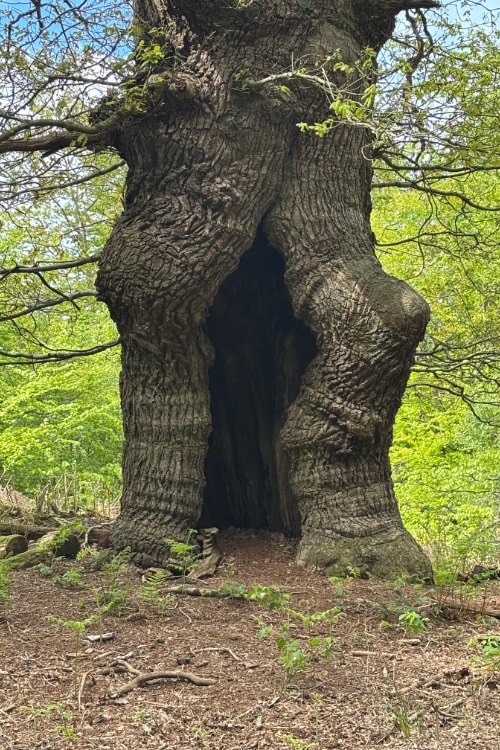
How can I spot an ancient tree?
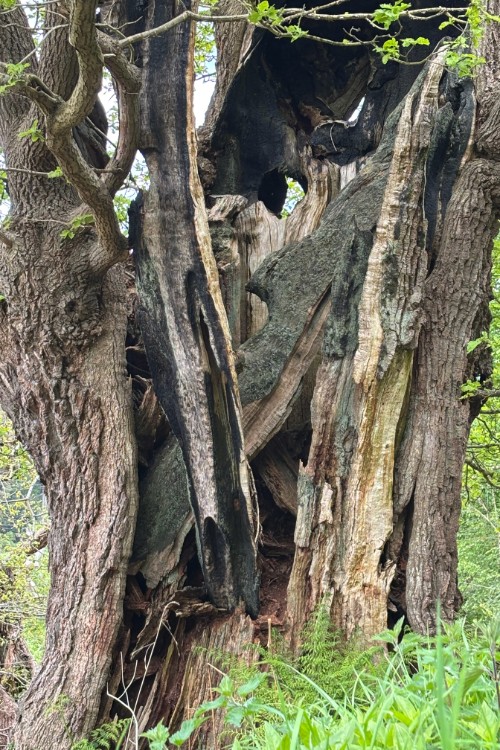
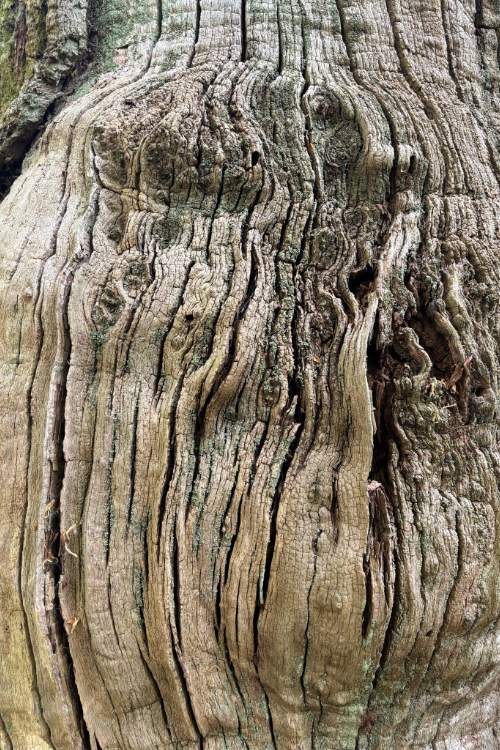
There are signs to look out for. These include a large girth in comparison to other trees, reduced crown height, the crown may also have stopped growing entirely. Hollow trunks, rougher bark with lots of crevices are also important. You could also just ask yourself does it look old and have lots of character? If the answer is yes, there’s a good chance you’ve spotted an ancient tree, and if not, it is likely a veteran tree, which is also a fascinating specimen.
Veteran trees don’t have to be a particular age, it's more down to their features, which it may pick up at an early age due to damage or disease. Their own crevices and cavities provide brilliant habitat for wildlife.
Where can I find ancient trees?
Although it’s likely many more exist, around 19,000 ancient trees have been recorded in the UK. In fact, up to 90% of Europe’s ancient trees are right here in the UK. The best way to find them is through the Woodland Trust’s Ancient Tree Inventory, where you can search, discover and even add trees.
Adam Ditchburn.