

First published as a Moors Messenger 'People in the Park' article, November 2021
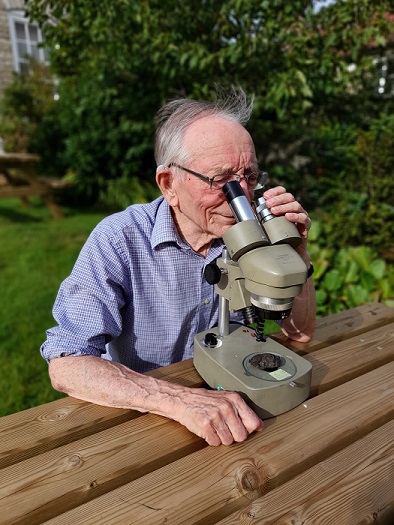 Derek Capes’ life-long fascination with natural history was sparked by a childhood Christmas gift; a book about British wildlife. As a teenager, weekends and school holidays were spent at the Museum of Natural History at Woodend, Scarborough and he was an enthusiastic member of his local Field Naturalist Society. Although his busy working and family life left little time for him to fully pursue his interests, in retirement, Derek is making an invaluable contribution to our understanding of small mammal populations and fluctuations in the North York Moors.
It was at a meeting of the National Park’s Mammal Forum in 2013 when Derek Capes first volunteered himself to try and shed some light on the distribution of the harvest mouse within the National Park. Local (and indeed national) records on the species are sparse, however they are widely thought to be in decline.
Having previously found evidence of harvest mice while analysing owl pellets, Derek decided that this method, rather than the use of small mammal traps or the painstaking search for their nests, was ‘infinitely better’.
“Barn owls cover a wide area in all seasons and almost all weather,” he explains.
“Their pellets, which are the regurgitated, compacted fur and bones that they are unable to digest, therefore provide a fantastic picture of the small mammals in that area.”
Derek is in contact with a number of enthusiastic licensed bird ringers, who collect samples of 30 to 40 owl pellets as they go about their ringing activities. For analysis, Derek soaks the pellets in water, then gently separates the fur and bones using kitchen sieves.
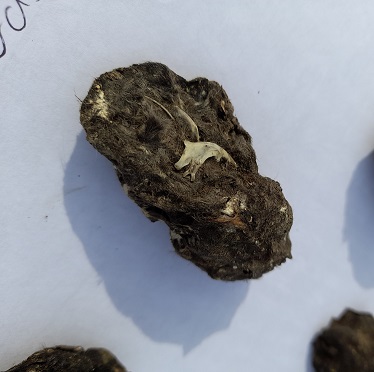 “I might add that I have my own set of tools for this,” he says. “This avoids any chance of the bones becoming contaminated with last night’s supper!”
His knowledge and experience mean he is able to identify minute differences in the size and shape of the mammal remains in order to identify which species are present in the sample. For harvest mice, it is the size, coupled with key indicators such as the number of roots on the teeth which Derek is looking for.
Typically he finds pellets are composed of 40-80% field vole (a barn owl’s favourite prey) and up to ten other species. So far, more than 100 sites within the National Park have been sampled, with some 40% positive for harvest mice. However, the majority of these sites lie in the north and central parts of the Park, leaving much of the coast, south and western regions yet to be investigated.
Last updated: 05 Nov 2024