

Integripalpia was an evolving series of creative projects led by Ed Carter, presented at Helmsley Castle during Spring 2024 as part of the Ryevitalise Community Arts Programme.
The project was inspired by a group of riverflies known as the cased caddisfly. These fascinating creatures are incredibly sensitive to pollution and changes in the river, relying on clean water for their survival.
As an important part of the food web, the aim of the project was to highlight the important role the cased caddisfly plays in the river’s ecosystem, and to encourage conversations about how we can provide a safe habitat for the plants and animals that live in and around the Rye.
Each element of the project was informed by the cylindrical structures that are built by cased caddisfly larvae. Using materials found on the riverbed (such as stones, sand, and organic matter), they each construct a tiny mobile home - the pinnacle of sustainable architecture!
The pieces were created in collaboration with pupils from Terrington CE Primary School, Ryedale District Scouts, Sight Support Ryedale. Mirrors were kindly donated by members of the local community, each different in shape, size, and style, referencing the process of the cased caddisfly larvae forming its unique case.
Video:
The cased caddis is a crucial food source for dippers, Ed recorded a piece of music inspired by the dippers song, Their numbers have dropped by 39% in the past 25 years. The sound you hear is a recording of the dippers song, it’s speed reduced by 39%, and snippets recreated on a bamboo overtone flute. The flute represents the organic cylindrical nature on the cased caddis case.
MADE YOU LOOK
This installation represented the delicate, organic structures created by the cased caddisfly, and the fragile existence of our aquatic insects.
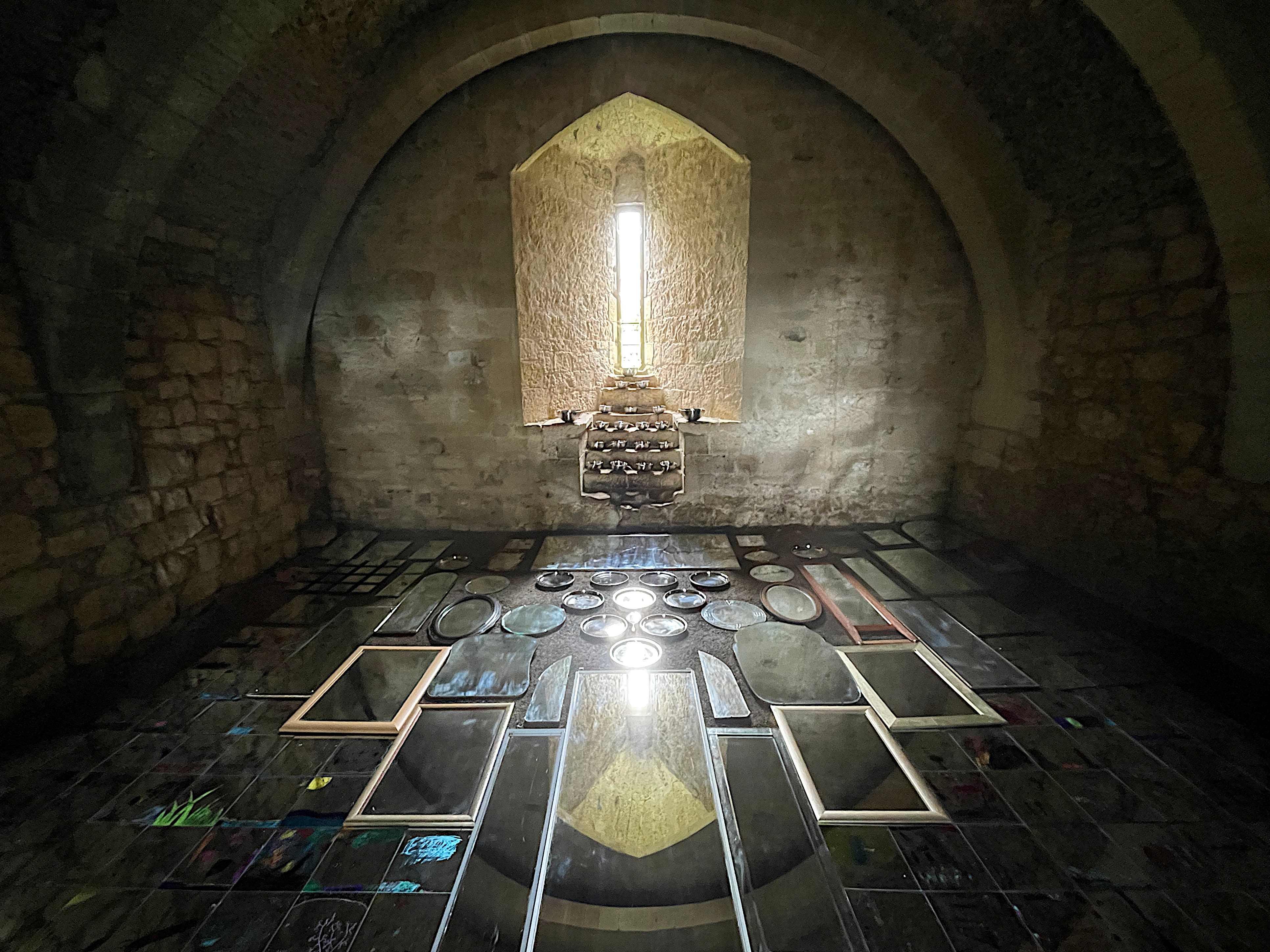
The cellar at Helmsley Castle was the perfect location for this project - a semicylindrical structure built from local materials, and one which also needs our protection if it is to survive for future generations.
The markings on the ceiling above are impressions of wicker made from hazel, a natural frame used to support the plaster between the vault spines during construction. The mirrors laid on the floor reflect the arched ceiling, turning the space into a full cylinder, and representing the shape of the cased caddisfly.
We intended to MAKE YOU LOOK, and appreciate what’s here… whilst we still have the chance.
ORGANIC ARCHITECTS
Cased caddisfly build their cases out of organic matter they find along the riverbed, including sand, stone, vegetation and woody material such as twigs. Using silk produced from glands around their mouths, each particle is carefully glued together to form a protective case around the larvae.
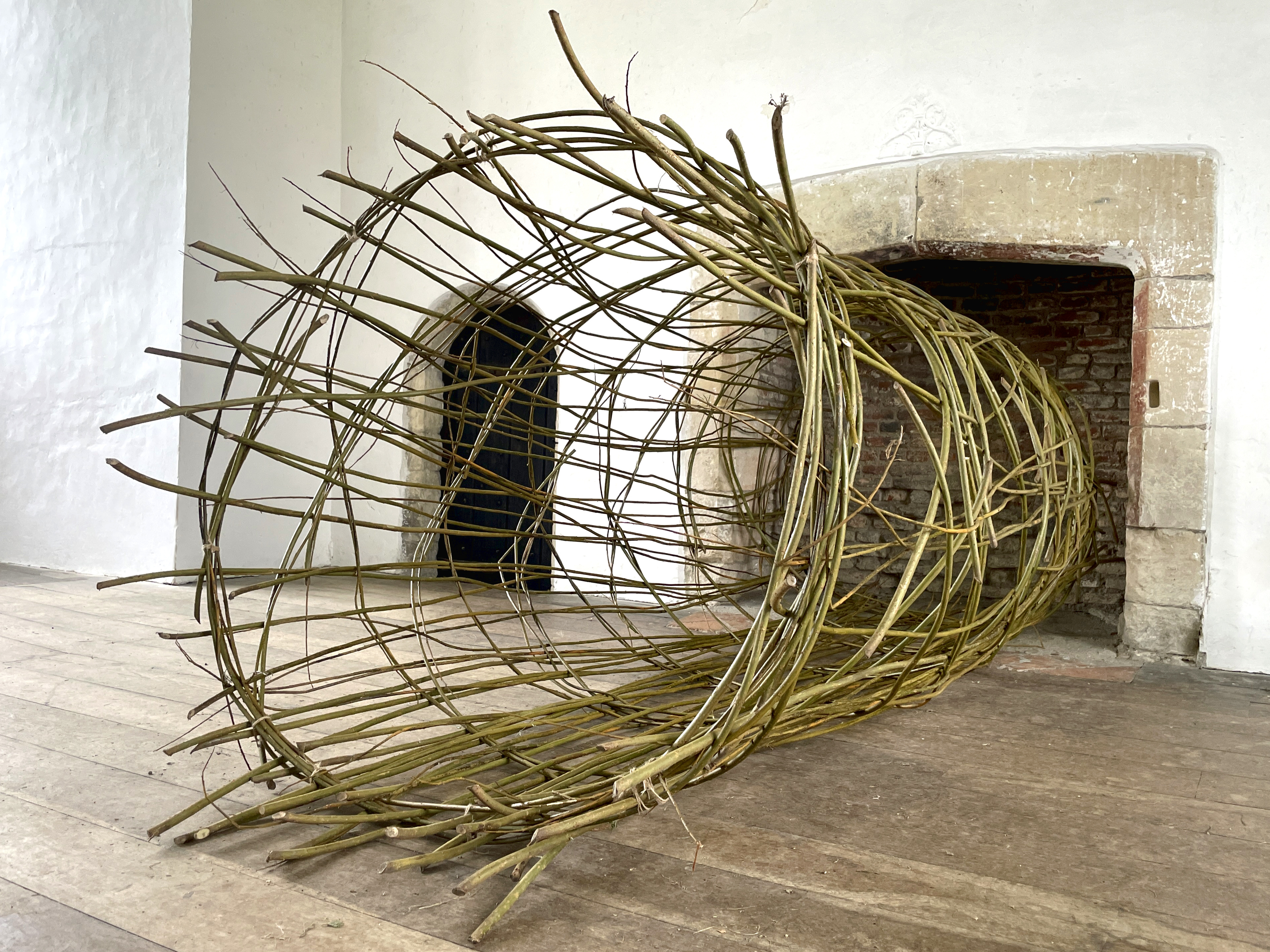
This case protects the larvae from predators such as fish and birds. Many species of cased caddisfly exist, each identified by the materials and shape of their case, barely visible to the naked eye.
This willow sculpture represented the intricate construction process the cased caddisfly undertakes in building its case, adding natural material piece-by-piece to create a self-sustaining structure.
The Ryevitalise Community Arts Programme
This project was part of the Ryevitalise Community Arts Programme, with its core aim to raise the profile of our fascinating river environments and re-connect people to the different aspects of this diverse project. We believe art and creativity allows the landscape to be interpreted in varying ways and enhances accessibility to key audiences.
Alongside habitat creation throughout the project area, and schemes to improve water quality, Ryevitalise focused on creating a more naturally-functioning river by removing in-channel obstacles and giving the river the space to move freely. This helped restore the aquatic environment, boosted biodiversity and benefited species such as brown trout and kingfisher.
The Ryevitalise Landscape Partnership worked together to conserve, enhance and restore the natural and cultural heritage of the River Rye and its tributaries, the River Seph and River Riccal, and to connect people with the history, wildlife, and landscapes of this special area. Supported by The National Lottery Heritage Fund, North York Moors National Park Authority, and partners, Ryevitalise worked to inspire local communities, volunteers, farmers, and welcome visitors from near and far to learn more about this amazing river catchment, and how we can all do our bit to look after it.