

Communities rallying for conservation
Launched in 2024 the Dark Skies Friendly Community scheme is going from strength to strength in the North York Moors National Park and Howardian Hills National Landscape. A growing number of communities have gained recognition for the work they do to protect and enhance the quality of the night sky above their neighbourhood.
Since Hawnby became the first community, it's estimated over 2,500 people live under the accreditation. Work undertaken includes over 1,000 lighting replacements to a dark sky-friendly standard. Other awarded locations across the North York Moors and Howardian Hills include Ampleforth Abbey, Coxwold, Lastingham, Sleightholme Dale, Husthwaite, Bulmer, Crayke and Terrington. Look for the black moons on the map below, including those businesses involved in the original dark skies friendly scheme.
What does the application entail?
To gain accreditation, communities must commit to:
- demonstrating community support for the project
- undertaking a lighting audit and show a minimum level of compliance
- delivering a significant lighting improvement project
- running at least two outreach events per year
- promoting the International Dark Sky Reserve status and dark skies conservation efforts of the National Park and Howardian Hills Partnership
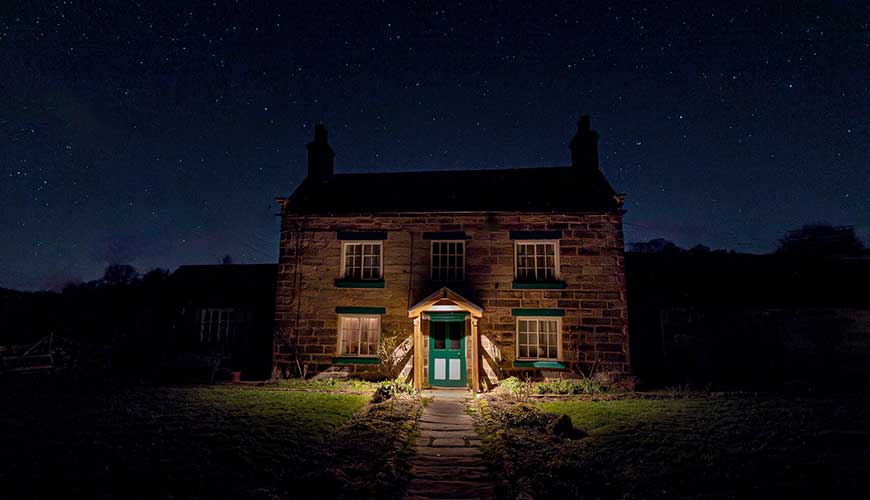
Apply to become a Dark Skies Friendly Community
We're here to help on your journey to become a Dark Skies Friendly Community. Get in touch with us if you'd like to find out more about getting involved.
View and start the Dark Skies Friendly Community scheme application.
Compelling conservation
We're delighted at the scheme's success so far. It's captured the imagination of many people living in our protected landscapes. Unlike most environmental issues, reducing light pollution can be a relatively quick fix.
Committed individuals, groups and businesses in a Dark Skies Friendly Community have realised that altering external lights is something fairly simple and positive. It's not about plunging places into complete darkness but looking at how we use lighting effectively and responsibly.
Reasons to reduce light pollution go way beyond beautiful skies. There's potential energy savings, health and wellbeing benefits for nature and humans, as well as cultural heritage links.
Last updated: 24 Nov 2025