

North York Moors National Park Visitor Survey 2025
How visitors and their experiences have changed between 2019 and 2025
The 2025 visitor is more likely to be a frequent repeat visitor, stay overnight and place greater value on peace, nature, outdoor activity, local food, National Park Centres and digital connectivity. The core experience remains very strong, while changing expectations create targeted opportunities for service development.
Background and methodology
The findings from the research are used to measure progress towards the Authority’s current Management Plan targets in relation to visitors’ perceptions and awareness of the National Park, and also to understand who visits, in terms of their profile, visiting behaviour and visitor satisfaction/experience.
Emotional Logic was commissioned to conduct the fieldwork and analysis on behalf of the Authority. Twelve interview locations were used, reflecting the patterns of the previous 2019 survey (Dalby Forest, Danby Lodge National Park Centre, Goathland, Helmsley, Hutton le Hole, Osmotherley, Pickering, Robin Hood’s Bay, Roseberry Topping, Runswick Bay, Sutton Bank National Park Centre and Whitby). The 2025 survey followed broadly the same methodology as in 2019, allowing key comparisons to be made between the two periods. Fieldwork was conducted across both summer and winter waves.
A total of 2,085 interviews were completed in 2025, comprising 1,024 summer interviews and 1,061 winter interviews. This compares with 1,929 interviews in 2019, made up of 1,016 summer interviews and 913 winter interviews. Overall, the 2025 survey included 156 more interviews than the 2019 survey.
The 2019 winter fieldwork took place between 11 October 2019 and 15 March 2020, while the 2025 winter wave was conducted between 11 October 2025 and 27 March 2026.
The questionnaire remained broadly consistent between the two surveys to enable comparisons across key measures, including visitor profile, visiting behaviour, activities, motivations, awareness and perceptions of the National Park, and visitor satisfaction and experience. Where questions or response options changed between the two years, comparisons have been limited to sufficiently consistent measures and should be interpreted with appropriate caution.
The results were analysed at the 95% confidence level. Based on the overall sample sizes, the maximum margin of error is approximately ±2.2 percentage points for 2019 and ±2.1 percentage points for 2025, although the margin of error is greater for questions with smaller respondent bases.
Key findings
Visitor profile
The survey reveals a shift towards an older visitor profile in the North York Moors. In 2025, visitors aged 55 or over accounted for 46% of the overall profile, compared with 37% in 2019.
The largest change is among visitors aged 65 or over, who now represent almost one quarter of the visitor profile, increasing from 18% in 2019 to 24% in 2025. The proportion aged 55–64 also increased, from 19% to 22%. By comparison, the representation of all age groups under 55 has decreased slightly. Visitors aged under 45 now account for 36% of the profile, compared with 41% in 2019.
Visitors with long standing health issues or a disability limiting daily activities have increased to over a fifth, compared to 16% in 2019. This could be attributed to the National Park's objectives to increase accessibility for all members of the public.
Overall, the findings suggest that the National Park is attracting a greater proportion of older visitors, reinforcing the importance of accessible facilities, clear visitor information and a range of lower-intensity ways to experience the landscape.
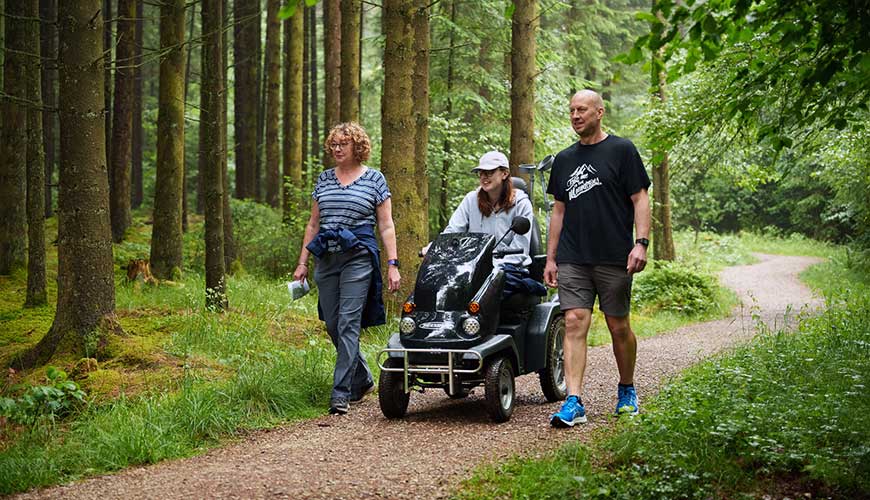 Partner or spouse visits remain the most common, although these fell from 68% in 2019 to 60% in 2025. Meanwhile, solo visits increased from 3% to 8%, and visits with friends rose slightly from 21% to 24%, indicating a more varied mix of visiting parties in 2025. Despite this changing mix, the average party size remained broadly stable, increasing marginally from 3.3 people in 2019 to 3.4 in 2025.
The proportion of visitors who considered themselves to be from a minority ethnic group remained relatively low, although it increased slightly from 4% in 2019 to 5% in 2025. This represents 110 respondents in 2025, compared with 80 in 2019, suggesting a modest broadening of the visitor profile. However, the findings continue to indicate an opportunity to make the National Park relevant and accessible to a wider range of communities.
The main audience for the North York Moors continues to come from nearby regions. In 2025, 44% of visitors lived in Yorkshire and the Humber, compared with 26% in 2019, making this the largest source region. A further 38% came from the North East and Cumbria, broadly similar to the 35% recorded in 2019. Together, these two regions accounted for 81% of visitors in 2025, compared with 61% in 2019.
The increase in visitors from Yorkshire and the Humber is accompanied by a decline in representation from several regions further afield. Visitors from the North West decreased from 10% to 2%, while those from the East of England and Scotland each fell from 4% to around 1%. This indicates that the 2025 visitor profile is more geographically concentrated around Yorkshire and the North East and Cumbria. However, differences in the fieldwork profile between the two surveys should be reviewed before concluding that these movements reflect changes in the wider visitor market.
Over half of respondents were still day visitors in 2025, although this proportion fell from 68% in 2019 to 51%. Short breaks of four nights or fewer increased from 27% to 39%, while longer holidays rose from 4% to 10%, indicating a clear shift towards overnight stays.
The National Park continues to attract a large proportion of repeat visitors. The share visiting six or more times in the previous three years increased from 20% in 2019 to 35% in 2025, while first-time visitors fell from 18% to 14%. Repeat visits also appear more recent, with 49% having last visited within the previous six months, compared with 38% in 2019.
A broad range of activities were undertaken by visitors in 2025, with cafés and tearooms the most popular at 59%, followed by general sightseeing or pottering (50%), gentle walking (48%) and visiting a town or village (41%). Compared with 2019, gentle walking has almost doubled from 24% to 48%, while relaxing or doing nothing increased from 11% to 28%. Visits to Danby Lodge and Sutton Bank National Park Centres also more than doubled, rising from 11% to 23%, and 9% to 22% respectively. In contrast, general sightseeing fell from 62% to 50%, tourist attractions from 30% to 16%, and eating out in restaurants from 32% to 12%.
Overall, the results suggest a shift towards gentler, more relaxed activities and greater engagement with the National Park Centres.
Eating and drinking at pubs and visiting woodlands or forests were new options in 2025, so these cannot be directly compared with 2019.
Motivations to visit and visitor satisfaction
Previous experience and word of mouth remain the most important influences on visits to the North York Moors. Previous experience prompted 70% of visits in 2025, broadly unchanged from 72% in 2019, while recommendations from friends and family remained stable at around 25%. Visiting friends and relatives became a more prominent influence, increasing from 4% to 10%, while Tripadvisor rose from 6% to 8% and social media increased slightly from 9% to 11%. The influence of Out and About in the North York Moors fell marginally from 13% to 12%.
A new unprompted question introduced in 2025 to understand the sources of information that helped inspire their decision to visit, reinforces the importance of visitor loyalty: 68% spontaneously cited previous experience as an influence, well ahead of recommendations from friends and family at 13%. As this question was not included in 2019, the results provide useful context but cannot be used for trend comparison.
The National Park’s landscape remains its strongest draw, with beautiful unspoilt scenery considered important by virtually all visitors (100%), while getting close to nature and wildlife (99%) and peace and tranquillity (97%) were also near-universal priorities. All three received very strong experience ratings, with 100% rating the scenery as good or very good, 99% rating nature and wildlife positively and 97% saying the same for peace and tranquillity. The proportion rating these aspects as very good also increased since 2019, particularly for peace and tranquillity, from 80% to 87%, and nature and wildlife, from 81% to 88%.
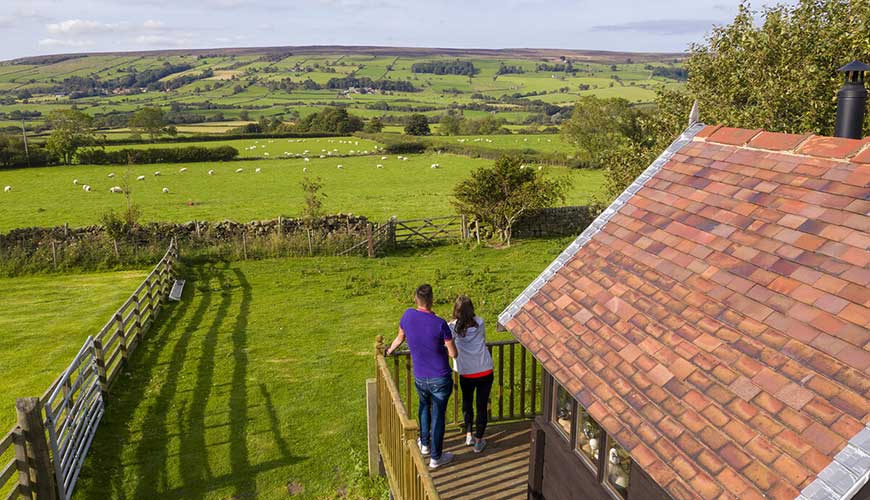
Visitor expectations have broadened since 2019. The importance of outdoor activities increased from 76% to 91%, locally sourced food and drink from 69% to 89%, National Park Centres from 67% to 86%, and WiFi or mobile coverage from 54% to 76%. Experience ratings improved in each area, with outdoor activities rising from 85% to 89% good or very good, while the highest rating of very good increased from 48% to 60% for local food and drink and from 49% to 62% for National Park Centres. Connectivity also improved, but remains a potential opportunity: 51% rated it good or very good in 2025, despite 76% considering it important.
Overall satisfaction remains exceptionally high, with 99% rating their experience as good or very good in both years. The proportion rating the overall experience as very good remained broadly stable, at 84% in 2025 compared with 86% in 2019. Visitors also remain strong advocates: 80% gave a recommendation score of 9 or 10, compared with 82% in 2019, while 88% said they were very likely to return.
Perceptions and awareness of the National Park
Visitor awareness of being in a National Park has increased substantially since 2019. Three quarters of respondents in 2025 correctly identified that they were in a National Park, rising from 59% in 2019 to 75%. Conversely, the proportion who believed they were in a National Landscape, formerly an Area of Outstanding Natural Beauty, fell from 32% to 13%. Around 5% believed they were on a Heritage Coast, unchanged from 2019, while 7% selected Country Park, compared with 4% previously.
The North York Moors’ status as a National Park has also become a more important influence on the decision to visit. Almost three quarters of respondents considered its National Park status very or quite important in 2025, increasing from 54% in 2019 to 73%. In particular, the proportion saying it was very important rose from 30% to 46%, while the proportion giving a neutral response fell from 36% to 18%.
When asked unprompted to name National Parks in northern England, 83% named the North York Moors in 2025. The Yorkshire Dales and Lake District were each mentioned by around 41%, followed by Northumberland at 21% and the Peak District at 17%. This question was introduced after 2019, so an unprompted comparison between the two years cannot be made.
Prompted awareness has grown considerably across all five National Parks. Awareness of the North York Moors increased from 74% in 2019 to 96% in 2025, while awareness of the Yorkshire Dales rose from 49% to 80%. The largest percentage-point increase was recorded for the Peak District, rising from 33% to 64%. Awareness of the Lake District increased from 63% to 86%, while Northumberland rose from 46% to 67%. The proportion unable to recognise any of the National Parks has dropped, pointing to stronger overall recognition of northern England’s National Parks.
Travel and transport
Private vehicles remain the main way visitors travel within the North York Moors, although there are some signs of a shift towards more sustainable modes. Car use to reach the interview location fell from 87% in 2019 to 82% in 2025, while walking increased from 5% to 11% and public bus use from 1% to 3%. Electric or hybrid vehicles, introduced as a new response option in 2024, accounted for 8% in 2025 and provide a new benchmark for future monitoring.
New questions introduced in 2024 provide further insight into travel among staying visitors. While cars continue to dominate both journeys to the North York Moors (76%) and travel while staying there (78%), visitors use a broader mix of methods once they arrive. Around 35% use walking and 17% use a public buses to get around, while 19% use an electric or hybrid vehicle. The greater use of walking and public transport for getting around suggests there may be more scope to encourage lower-carbon choices for journeys within the National Park than for the journey there.
Last updated: 20 Nov 2026