

The recent decision to step down the wildfire in Langdale Forest and Fylingdales Moor from major incident status is a very welcome development, but we want to stress that this marks the beginning of the recovery, not the end of the challenge.
We remind everybody that this is still an active incident. Rights of Way across Fylingdales Moor remain closed and Open Access is suspended. You can find further information, maps and diversions on the homepage of our website.
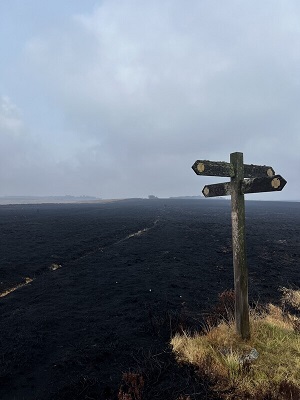
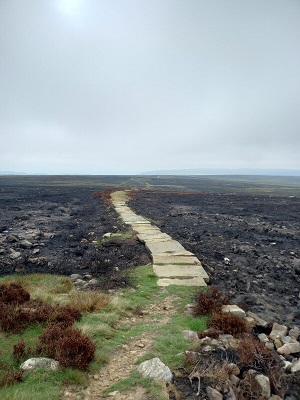
We take this opportunity to express again our heartfelt thanks to the farmers, gamekeepers and contractors who gave their time, equipment and expertise to assist North Yorkshire Fire and Rescue Services in tackling the largest fire the North York Moors National Park has ever experienced.
While the fire has been contained and the immediate emergency response is winding down, the impact of this event will be felt for months and years to come. The full extent of the damage to moorland habitats has yet to be assessed, but we know there has been significant harm caused in ecologically and archaeologically sensitive areas. National Park Officers have not yet been able to access the worst-affected locations due to safety concerns, including smouldering underground peat and the potential presence of unexploded ordnance. These areas remain hazardous and inaccessible to both us, and the wider public.
As soon as conditions allow, we will be working to properly assess the site and plan for the long-term restoration of this precious landscape. The safety of Rights of Way will form one of our key priorities and some aerial surveys are already underway.
One of the most immediate environmental concerns is erosion. Around 20 km² of vegetation has been lost, leaving bare peat soils highly vulnerable to wash-off over the winter months. Emergency restoration work is planned, with a focus on slowing surface water run-off, protecting water quality, and preventing further degradation of the exposed peat and historic landscape features.
Although some areas are already showing signs of regrowth, with purple moor grass and other fast-growing species beginning to appear, this doesn’t mean the habitat is recovering as it was before. While these opportunistic plants often dominate after fire and will help stabilise the soil in the short term, they don’t reflect the rich mix of species that once characterised the landscape. In fact, severe wildfires can permanently change the makeup of peatland habitats, destroying the conditions needed for specialist species like sphagnum moss, which is essential for peat formation. Full ecological recovery of these complex ecosystems, where possible, will take many decades.
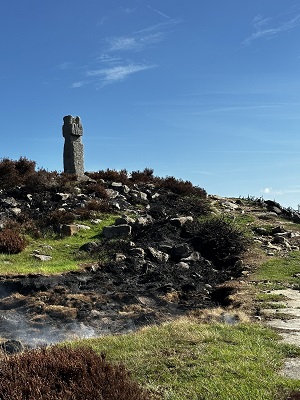
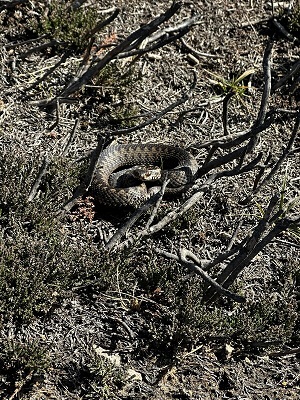
We continue to work alongside our partner organisations in the Local Resilience Forum to support farmers and landowners, local businesses and community members that have experienced significant disruption, damage or economic loss.
Early contact with members of the North York Moors Tourism Network highlights immediate localised impacts, through lost bookings and revenue, and concerns that visitors won’t think to simply avoid the immediate area, but may stay away from North York Moors altogether, adversely impacting on important autumn and winter bookings. Tourism businesses in the area are encouraged to complete this National Coastal Tourism Academy survey, which is open until Sunday 12 October. You don't need to be located on the coast for this to be relevant, we are keen to understand the full extent so we can target support most effectively.
The National Park Authority has also contacted farmers and land managers in the Whitby area with a document summarising the offers of grants and other support that are currently available to those affected by the fire. This will be updated as and when additional streams of support become available.
We would like to acknowledge the dedicated efforts of everyone involved over the last six weeks, from emergency responders and community members to National Park colleagues and partner agencies. This includes North Yorkshire Council, North Yorkshire Fire & Rescue Service, York & North Yorkshire Combined Authority, the National Farmers’ Union (NFU), Defra, Forestry England, Natural England and Historic England.
The incident has highlighted the strength of working together across organisations and sectors to manage a significant and multifaceted challenge. As we move into the recovery phase, continued collaboration and support will be essential.
Thank you for your ongoing commitment to protecting the North York Moors.
The latest updates from the North Yorkshire Local Resilience Forum regarding the Fylingdales Moor wildfire, can be found at https://www.northyorks.gov.uk/wildfire
Last updated: 03 Oct 2025