

Farmers across the North York Moors are tackling soil health, livestock performance and rising costs through a project that began with two long-standing farmer groups. The Derwent Dales and Esk Valley groups, run by Fraser Hugill and Karen Stanley, first formed in 2016–2017 with support from NYMNPA and Natural England. They received Countryside Stewardship Facilitation Funding until 2021, and in November 2022 secured FiPL funding. This has helped increase understanding of FiPL themes and priorities, while supporting farmers to access the Sustainable Farming Incentive (SFI) and new agri-environment schemes.
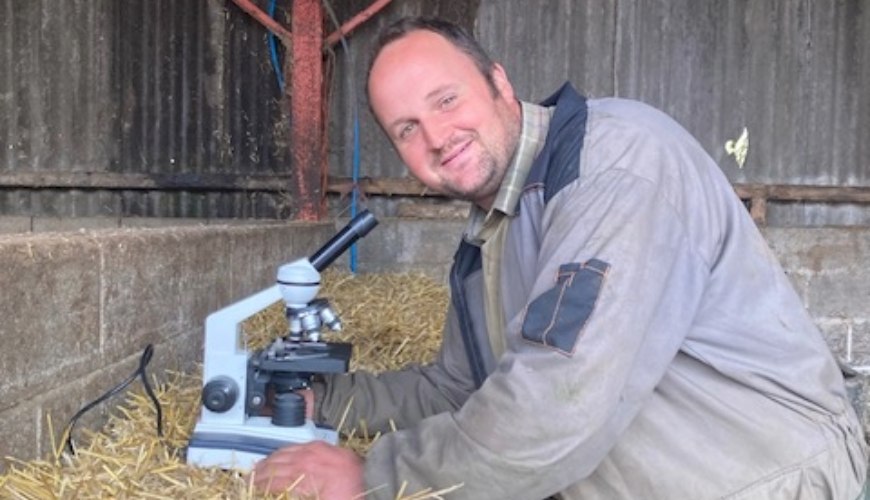
So far, the project has delivered 38 workshops, engaging 135 farmers on topics ranging from soil health and hedgerow management to feed planning and wormer reduction. Among those taking part are Karl and Emma Smith of High Wold Farm in Farndale. They attended several events, including a hands-on session at Grace Lane Vets where farmers were shown how to carry out their own faecal egg count (FEC). Karl was surprised by how straightforward it was to prepare a sample and examine it under a microscope. Attendees were also offered the chance to buy McMaster microscope kits, with 80% of the cost covered through FiPL.
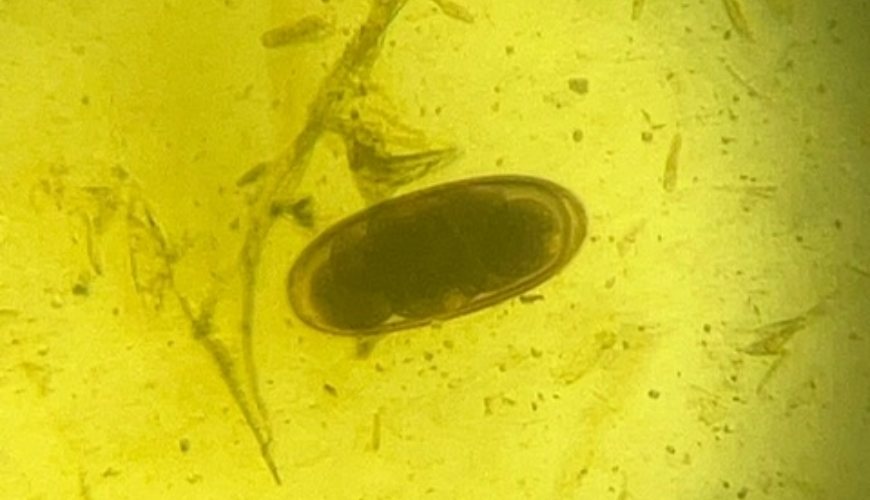
In November 2025, Karl and Emma hosted an event sharing how the training has transformed their approach. “We manage 1,000 sheep across 300 acres… We now carry out in-house FEC sampling… we’ve reduced wormer use by over 50%, improved animal health, and lowered our costs.” Their first year saw wormer costs fall to under £400, alongside better-targeted treatments, mixed grazing plans and regular sampling.
Reducing wormer use has brought ecological benefits too, including increases in dung beetles and other insects. As Helen Cockerill of Derwent Vale Vets puts it, using on-farm FEC testing has helped farmers “save money, time and labour… whilst also maintaining growth rates,” while supporting wider ecosystem health.
What is FiPL?
FiPL (Farming in Protected Landscapes) is a Defra funded Programme running in all of the English National Parks and National Landscapes to help farmers and other land managers adapt to future changes in agricultural support. By supporting farmers, land managers and people who live and work in these areas, we can help protect these exceptional places and support local communities. The Department for Environment, Food and Rural Affairs has confirmed a three-year extension to the programme, to March 2029.