

Ingleby Farms is a 448-hectare estate in North Yorkshire, owned by the Bell family. The estate comprises of a herd of 130 pedigree South Devon cows and 600 predominantly Lleyn sheep. The estate is contract farmed in partnership with Richard Patterson. Following a consultation with a regenerative farming expert and a carbon audit, Jack Bell secured FiPL funding to support a range of environmental goals.
The initial project at Scarthwood Farm involved restoring field boundaries and converting them into five smaller paddocks, supported by electric fencing and upgraded water systems. These improvements enabled rotational multi-paddock grazing for cattle and sheep. Success at Scarthwood led to similar developments at Mount Grace Farm, expanding regenerative management across the estate. This work aimed to protect Carr Beck, a tributary of the River Wiske and a designated High Priority area, from flood risk and sediment runoff.
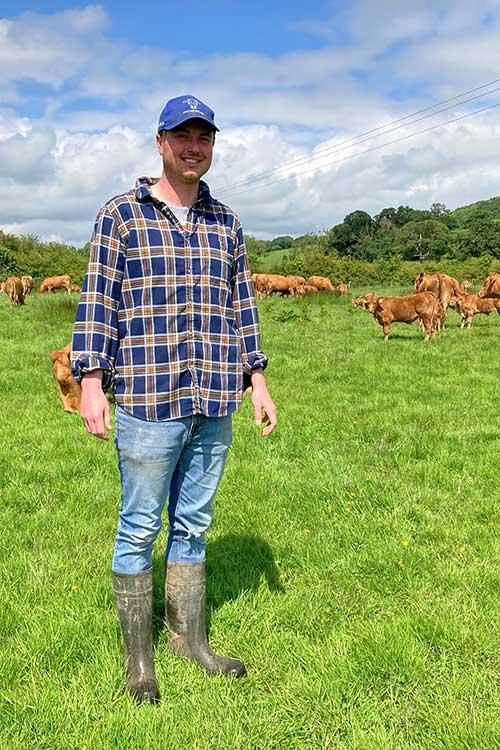
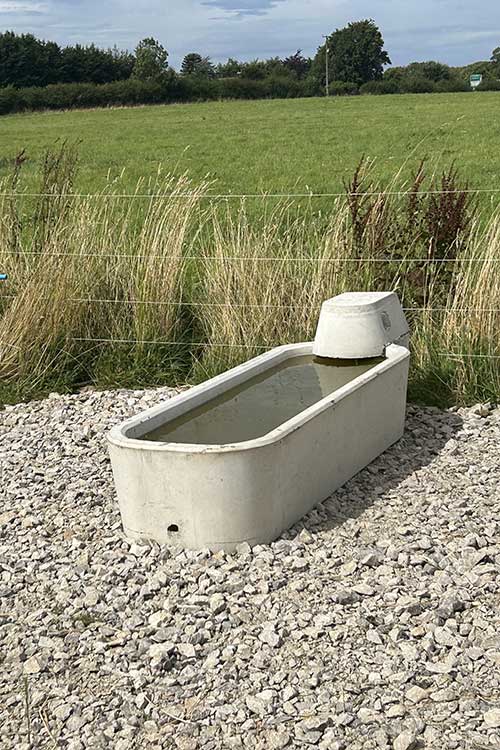
Fields were restructured into 1.4-hectare paddocks for rotational grazing. Paddock grazing is a planned grazing system that seeks to work with nature and improve farm profitability at the same time. Livestock are moved every 1–3 days, allowing pastures to recover and enhancing biodiversity, soil quality, water retention, and livestock health while lowering costs.
Infrastructure was also redesigned to reduce labour and capital expenses, using wide, cost-effective electric gates and strategically placed water troughs serving multiple paddocks. The Bell family converted the entire farm to this multi-paddock system in April 2025.
Management Plan
This project supports the following management plan objectives:
 Outcome 1: A resilient landscape at the forefront of addressing climate change and nature recovery.
Objective 1: The National Park should play a significant part in achieving the regional ambition of being a carbon negative economy by 2040.
Objective 2: Capture and store carbon by creating at least 2,500 hectares of additional wooded habitat by 2032.
Objective 4: Protect, restore and improve soils across the National Park.
Objective 5: Achieve good ecological status for all water bodies by 2027 and support the improvement of the marine and coastal habitat.
 Outcome 2: A nature rich, more biodiverse landscape.
Objective 6: Create bigger, better and more joined-up habitats, with nature-rich wildlife corridors extending beyond the National Park boundaries.
Objective 7: Restore wilder and more naturally functioning ecosystems on at least 2,000 hectares in the National Park.
 Outcome 5: A place that supports a diverse and innovative low carbon economy.
Objective 19: Maintain a strong and viable farming and land management community that delivers more for climate, nature, people and place.