

Escalating costs and long hours with minimal return prompted Mark and Louise Day to rethink their farm business which had been founded by Mark's father. They decided it was time for change and embarked on a whole farm regeneration plan. Mark felt very strongly that he wanted the farm to continue to help feed the nation but in a way that supported and worked with nature, as well as maintaining high animal welfare. They sold the dairy herd, bought in pedigree Shorthorn cattle and invested in shepherd huts for holiday lets.
We have found FiPL to be an extremely worthwhile resource for advice and funding. The application process was relatively straightforward, and Dave Arnott (FiPL Project Officer) was always on hand for assistance and guidance.
Mark and Louise Day
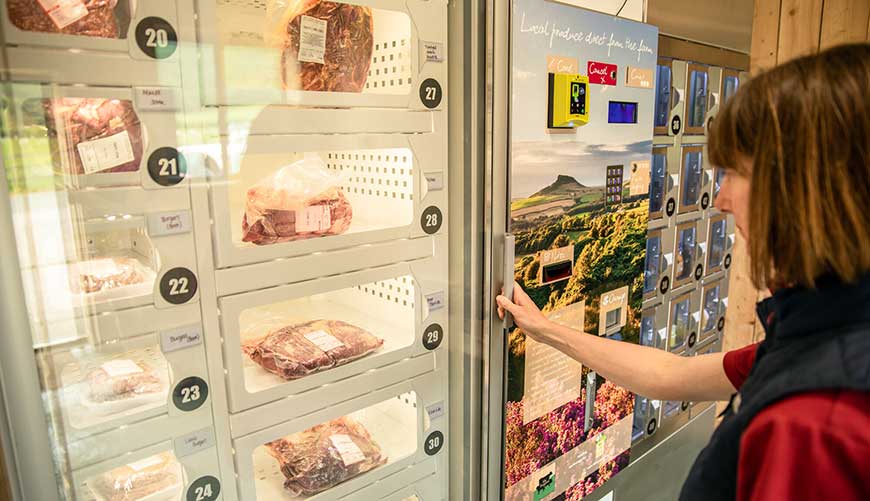
Thanks to FiPL funding and advice from Lordington Park Agronomy, they improved soil health and created species-rich grass swards that boost both biodiversity and livestock productivity. Working with a NYMNPA ecologist, they constructed ponds and scrapes to diversify wetlands, already witnessing more lapwing chicks and hoping for curlew breeders next season. In addition, an old dairy building now houses a meat vending machine offering their grass-fed beef and lamb, attracting visitors through Facebook and BBC Look North coverage. Finally, by planting a new hedge and five parkland trees, they’ve expanded wildlife habitats and enhanced carbon storage on their regenerated farm.
Management Plan
This project supports the following management plan objectives:
 Outcome 1: A resilient landscape at the forefront of addressing climate change and nature recovery.
Objective 4: Protect, restore and improve soils across the National Park.
 Outcome 2: A nature rich, more biodiverse landscape.
Objective 6: Create bigger, better and more joined-up habitats, with nature-rich wildlife corridors extending beyond the National Park boundaries.
 Outcome 4: A place that lifts the nation’s health and wellbeing.
Objective 12: Create specific, targeted opportunities to improve mental and physical health and well-being by connecting people with nature.
Objective 13: Increase awareness of, and access to, the National Park among underserved communities, particularly those in the surrounding area.
Objective 14: Inspire the next generation to enjoy, learn about and care for the National Park, and support young people’s direct involvement in decision-making about its future.
 Outcome 5: A place that supports a diverse and innovative low carbon economy.
Objective 19: Maintain a strong and viable farming and land management community that delivers more for climate, nature, people and place.