

The self-taught award winners
White Lodge Farm, in a beautiful and remote corner of the National Park, is made up of thirty-three acres of woodland, orchard, pond, river and rough grassland. Long-distance views extend across fields and hedgerows to distant pine forests. It’s a bucolic setting and of course, it’s not remote at all, just eight miles from Scarborough on the edge of Dalby Forest, close to the villages of Scalby and Hackness, but it feels miles from anywhere.
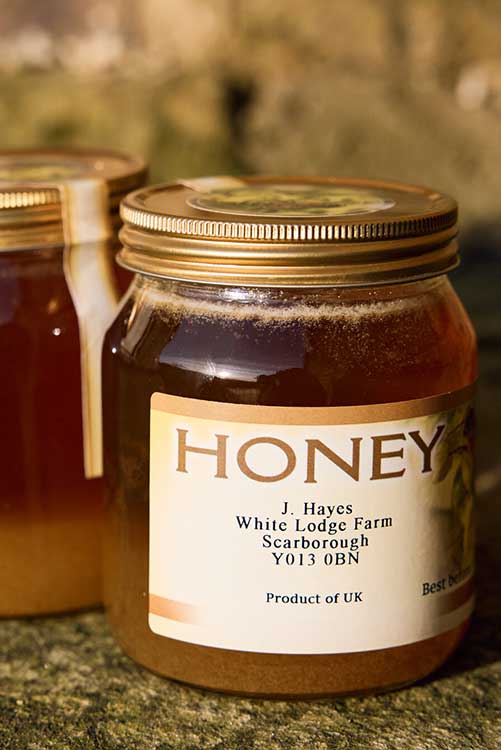
Mark and Jane Hayes settled here in 2015 after life and careers in the NHS, with the ambition of rewilding a long-neglected farmstead. To that end, and with support from the National Park, they are planting some 6,500 native broadleaf trees: oak, birch, alder, willow and lower-growing holly and hawthorn. They have also planted an orchard of over 200 traditional cider apple trees, along with beehives for Jane’s honey production.
They began by restoring the derelict farmhouse, unlived in for 50 years, in which they now live. They then created a two-bedroom holiday cottage and, remarkably, an observatory built by Mark, to house a powerful reflector telescope to detect distant galaxies and nebula in the dark skies.
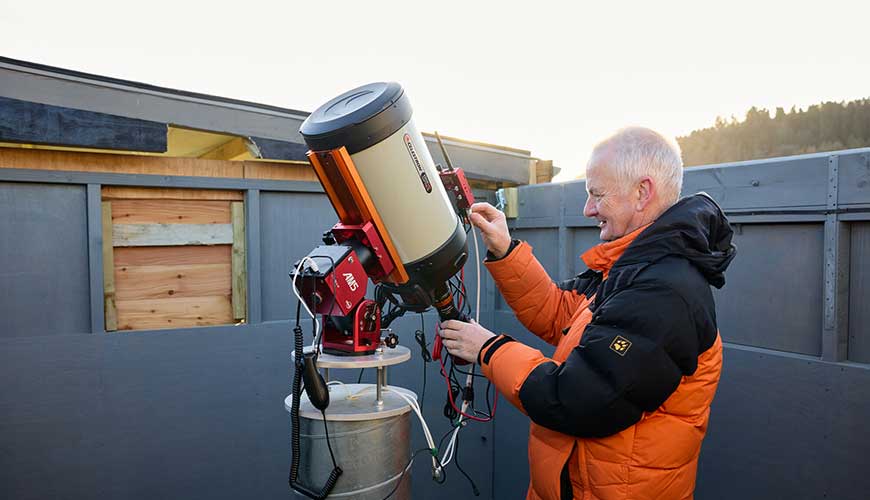
Protecting wildlife is all part of their rewilding philosophy. Goshawks, sparrowhawks, kestrels and tawny owls have been spotted overhead, while a nesting box in the barn is home to a couple of resident barn owls. Their security cameras have caught badgers, roe deer, foxes and glossy-coated otters climbing in and out of the beck, while a heron stands sentry in the reeds.
To build a viable life in this quiet corner of the National Park, Mark and Jane have created a ‘cidery’ producing top-quality sparkling cider from their own orchard apples using a mix of sweet, bitter-sweet, sharp, bitter-sharp apples to create a complex craft cider that in 2024 took the ‘Cider of the Festival’ at Scarborough’s CAMRA Festival.
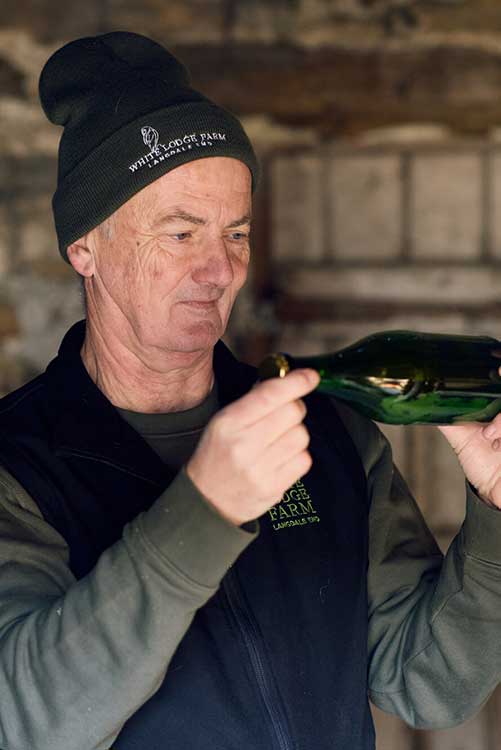
Learning how to turn a ton of apples into a quality product wasn’t easy says Mark. He trawled the internet, devoured books and taught himself the complicated ‘méthode champenoise’ the traditional method of Champagne production.
It’s a labour-intensive and technical process involving racking, riddling and disgorging before bottling, corking and labelling then adding the familiar wire and foil used for sparkling wines and Champagne. The ‘sparkle ‘ comes from a secondary fermentation so that the carbon dioxide remains within the bottle to create a gentle, sparkling cider. ‘I made so many mistakes in the process’ remembers Mark, ‘you don’t think you can do it until you can, then you don’t know how you couldn’t’.
Mark and Jane currently produce 1,000 bottles of craft cider a year. They are exploring local markets, including restaurants, for their White Lodge Farm cider and sell direct from the farm. It’s available in dry, medium and sweet varieties at £10.99 a litre.