

The wildlife-friendly producers
Adam and Ruby Tildsley are a remarkable young couple, creating something exceptional from their little farmstead in the village of Suffield, on the edge of the National Park, five miles north of Scarborough.
In 2016 they bought two fields near their home, with the ambition of creating a smallholding for growing fruit and vegetables, making cider and fruit cordials and selling from a farm shop beside the house.
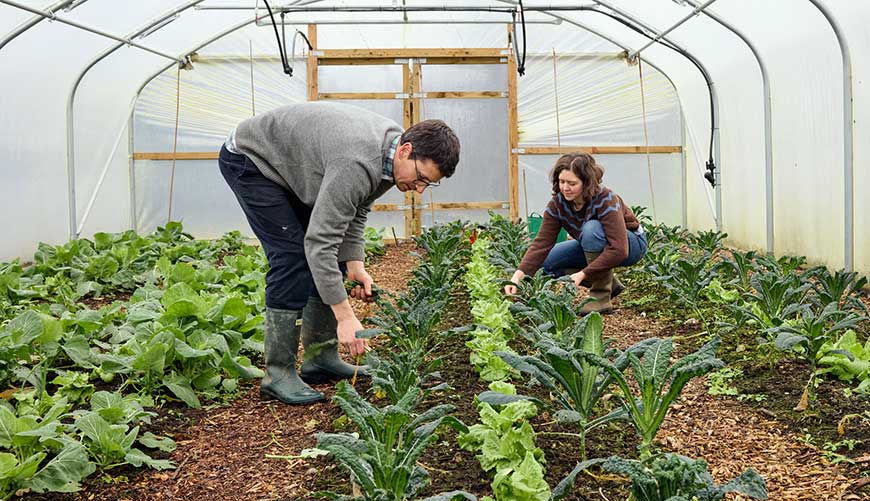
Over the following years, they have achieved this and much, much more. On a difficult, sloping plot, they grow staples like onions, carrots, kale, chard and cabbage for their veg. box deliveries. In three polytunnels, there are salad leaves, garlic, tomatoes, fennel, cucumbers and aubergines.
The orchard provides forgotten varieties of apples such as Brownlees Russet, Ashmead’s Kernel and Pitmaston Pineapple, sold fresh or pressed into cider. Redcurrants, white currants, gooseberries, raspberries and rhubarb are converted into fruit cordials.
If this sounds like any other smallholding, think again. Adam and Ruby have a philosophy and commitment to the land that is admirable. The enterprise is as much about improving the soil, supporting biodiversity and creating a rich habitat for wildlife as it is for providing a living and a lifestyle for themselves and their four children.
All their planting is aimed at what they call ‘wildlife-friendly gardening’. Spring bulbs provide nectar for emerging bumblebees. Berry-laden trees and shrubs like rowan and sea-buckthorn provide food and shelter for birds, bats and insects. An upturned plant pot might be a haven for frogs and toads, a pile of logs a shelter for hedgehogs. Wildflowers fight their way through a path of compacted limestone to provide nectar for bees and butterflies, as well as a fine summer display.
The vegetables are grown using the ‘no dig’ method in which soil and mulch are added in layers so that plants are grown with minimal disturbance to the soil. ‘This method improves the soil and supports carbon capture’ explains Adam. It’s known as regenerative agriculture, of which the National Park was very supportive.
Four natural ponds, unlined using groundwater and rainfall, are being allowed to colonise naturally and have become a haven for dragonflies and damselflies.
Once a familiar feature of British farmland, hay meadows have largely disappeared from our countryside. Mindful of the rich habitat they provide for birds and insects, Adam and Ruby have sown a wildflower meadow in a field beside the house, providing a glorious display in late spring and summer.
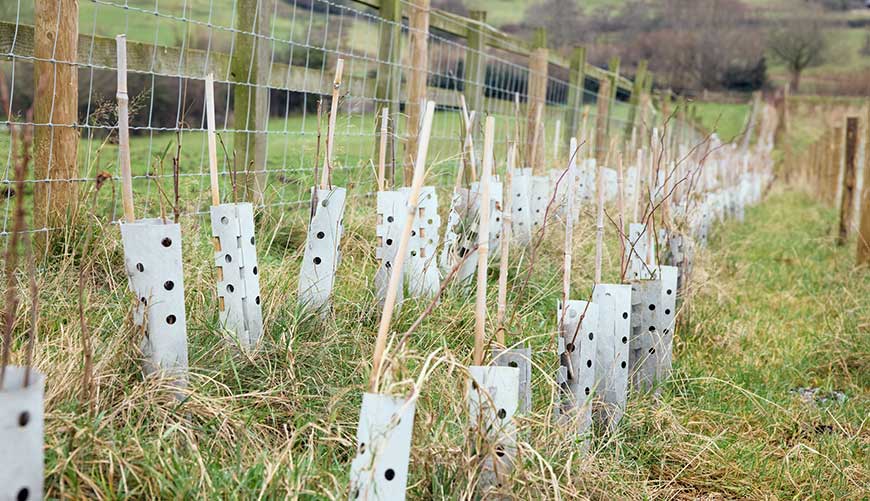
Perhaps the most ambitious and long-term of all their projects is a field in which they are developing a natural woodland by allowing plants and tree seeds to take root naturally without any human intervention. Since 2023 birch, rowan and oak have already taken root along with a variety of flora.
Adam and Ruby’s commitment to wildlife gardening is commendable. All their produce is grown without the use of artificial pesticides, herbicides or fertilisers and is sold through their vegetable box scheme (delivered locally) and from the farm shop.
The shop may be tiny, but it packs in a great deal. Naturally, all the fruit and vegetables are seasonal, along with other things to enjoy, such as Ruby’s home baking, organic bread, cakes, pastries and savouries. They sell local honey, marmalade and jams, home-produced vinegar, organic milk and butter, and a selection of groceries from the Suma co-operative. The freezer is packed with free-range poultry and pork.
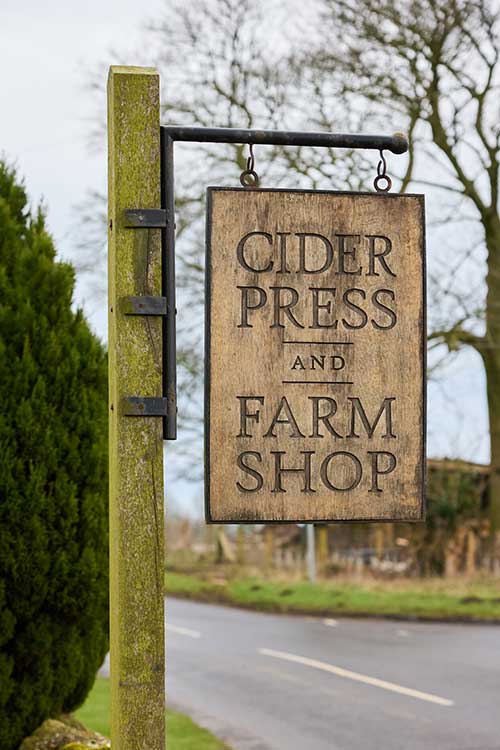
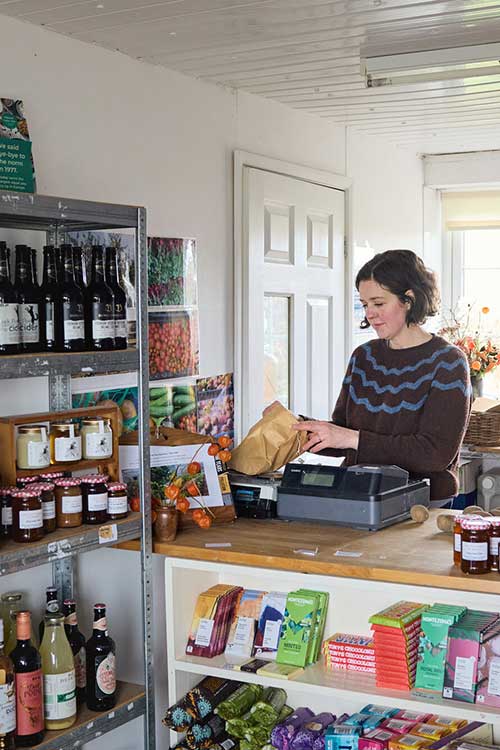
The cider press is an important feature of the enterprise. Blending a variety of cider apples for a rounded flavour, it is pressed and bottled to produce 3,000 litres a year. It’s a hot ticket. When the cider sells out, that’s it until next autumn. Ditto the fruit cordials in which soft fruits are picked at optimum sweetness, steamed and mixed with sugar, gently pasteurised and then bottled. Nothing else added.
The garden, the cider press, the kitchen bakery and the shop created by this hard-working and committed couple are outstanding. To produce good, wholesome food and drink in tune with nature and the seasons is described by Adam as ‘simple things done in a thinking way’.
So if you like their ethos, you will enjoy their produce, so get there early. Opening times are limited to Wednesday and Saturday, 9am to 12noon.